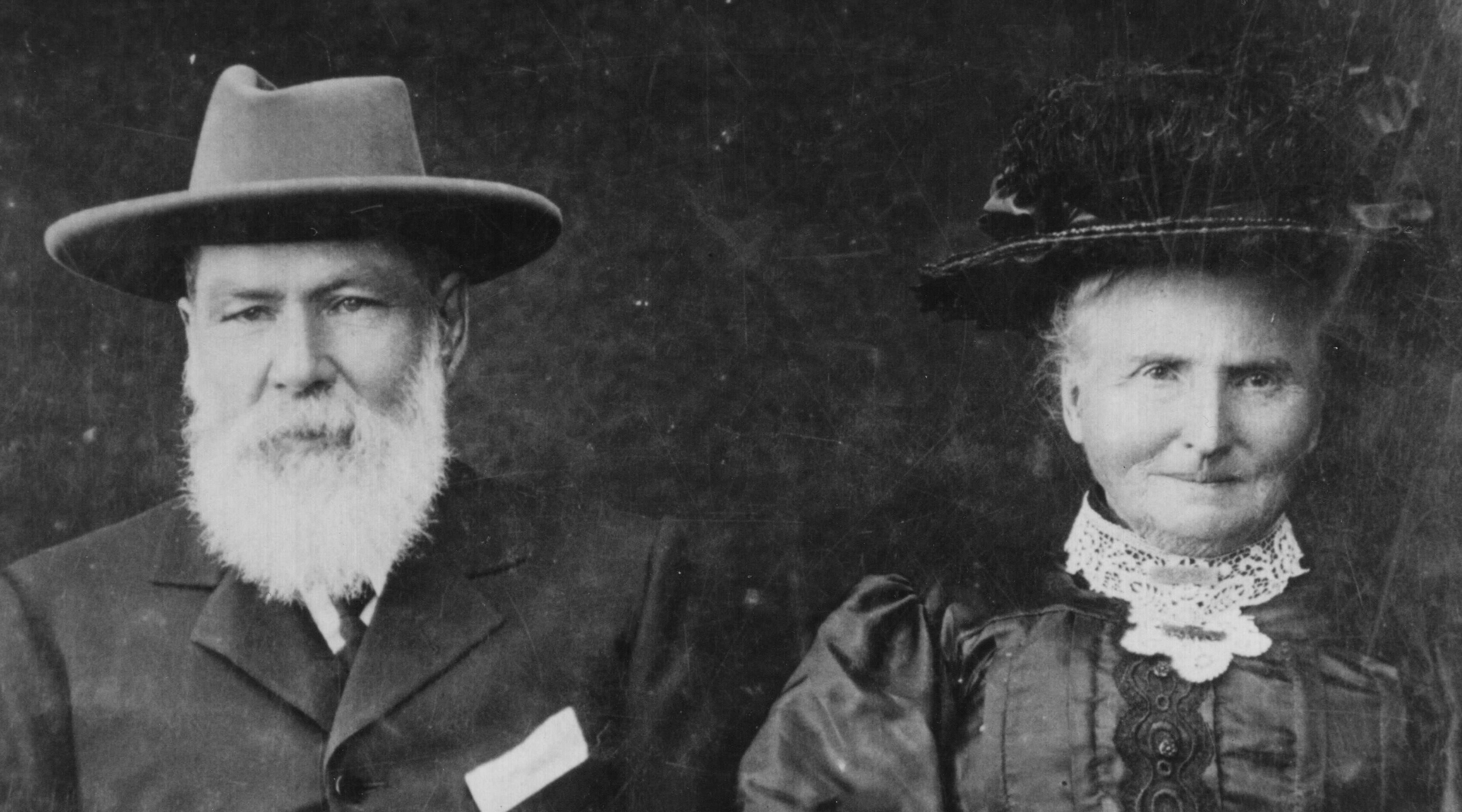
At long last, I am writing a post for my Hapgoods from Marksbury family history blog from… Marksbury!
I added a day to my worktrip to finally, finally, come to see Marksbury in person. And its every bit as wonderful and lovely as I had hoped.
I wrote about Marksbury in 2020 and posted a virtual tour of Marksbury Village connected to the 1851 census of Marksbury. There were only about 60 houses in Marksbury at the time (only about 80 now!) and its still small enough that there are no street names, only house numbers other than the short entrance street which now has a name. The village itself has been around since the 1600s and its still intact with no shops of any kind in the village – just a houses, farms, St Peters Church and walking paths.
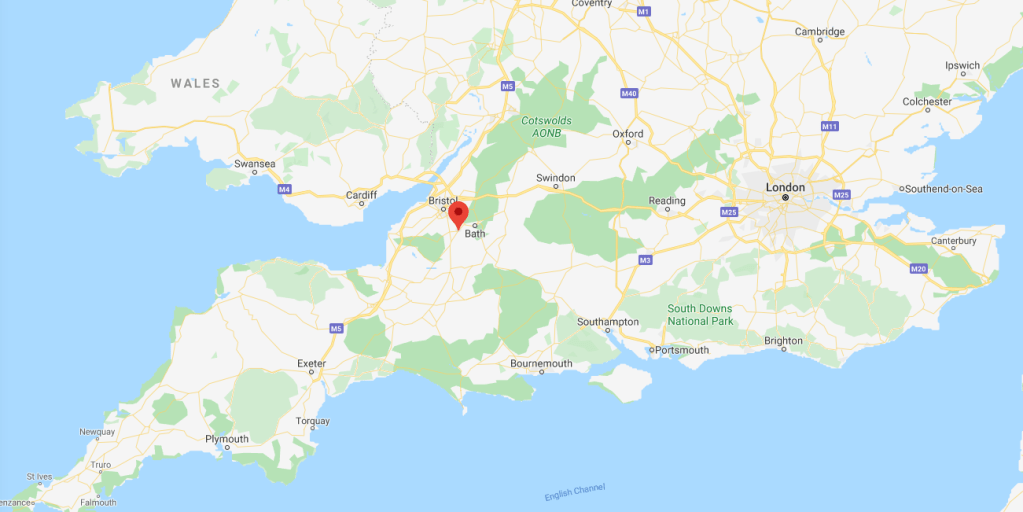


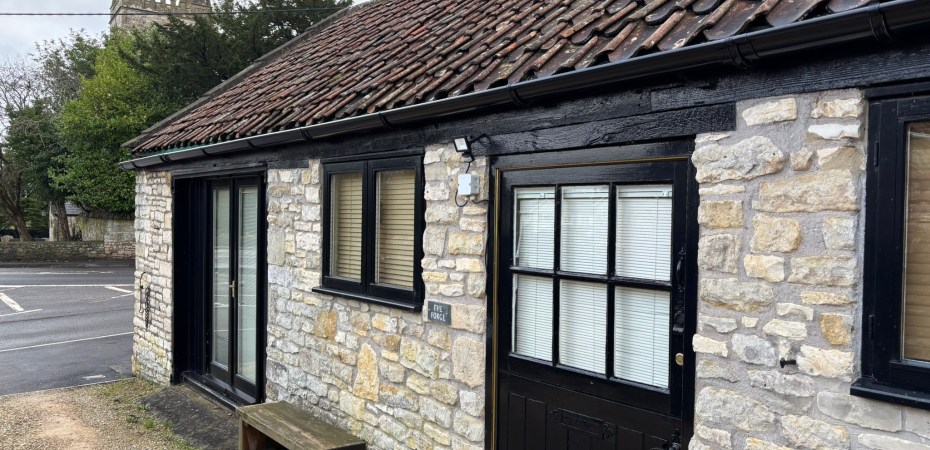
I arrived in Marksbury on Friday morning, after a very early landing at Heathrow and a 2 hour drive in a rental car. I booked “The Forge” which is now one of only 2 cottages that you can stay at in Marksbury.
Previous blog posts have covered over how John Hapgood and Elizabeth Shore were married in St Peters Church Marksbury in 1814, and had 10 children. Three of their children emigrated to Australia. Susannah Dando (nee Hapgood) who emigrated with her blacksmith husband Edward Dando and family in 1853 to join the Victorian Gold Rush . The following year in 1854 her brothers Thomas Hapgood & Hester Hanney & their children plus George Hapgood & Hannah Sims and their children emigrated together to NSW Australia in 1854. The Hanneys were also a Marksbury family, and the Dandos were from close by. Some of the other siblings emigrated to America whislt some remained in Marksbury.
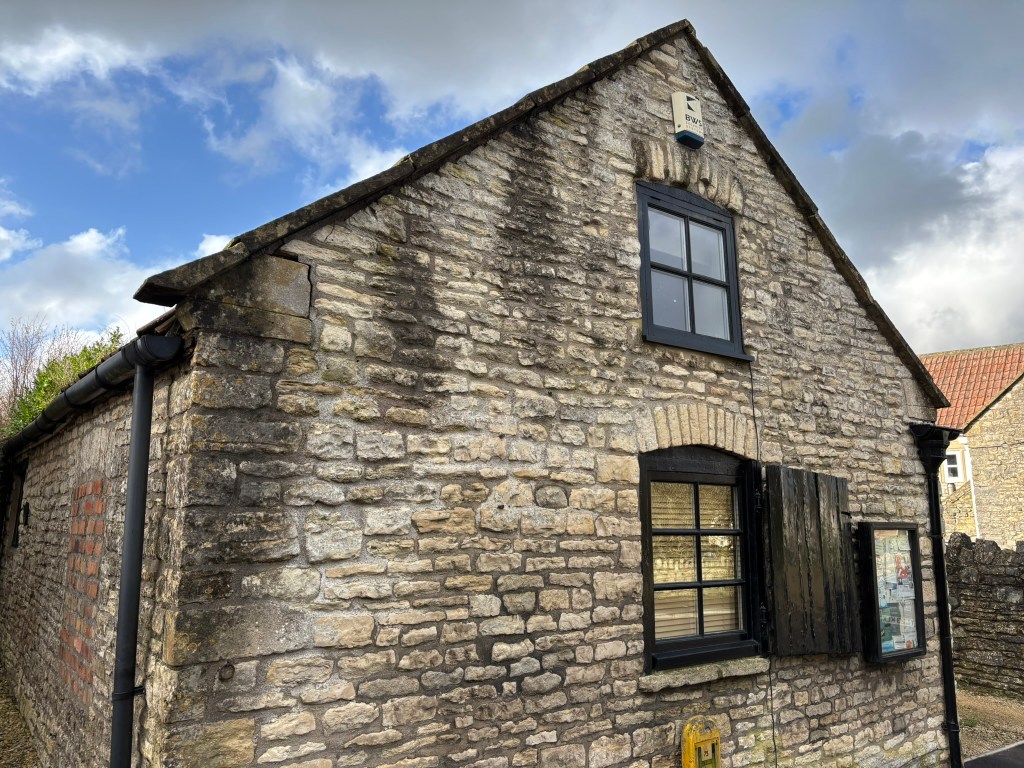
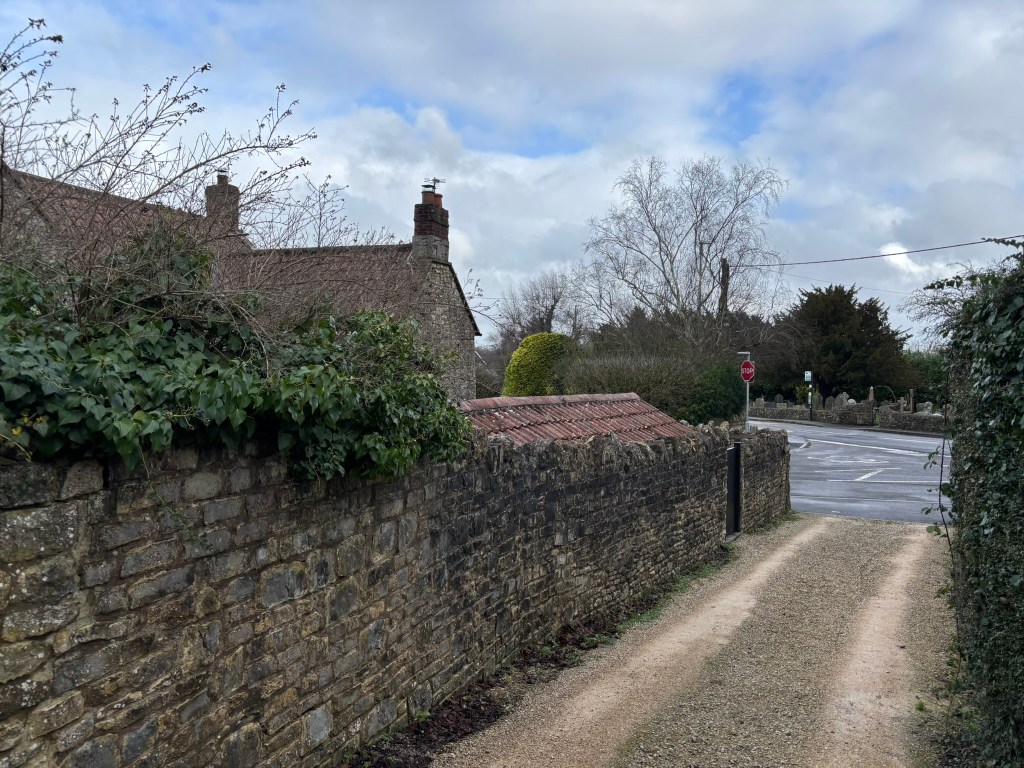
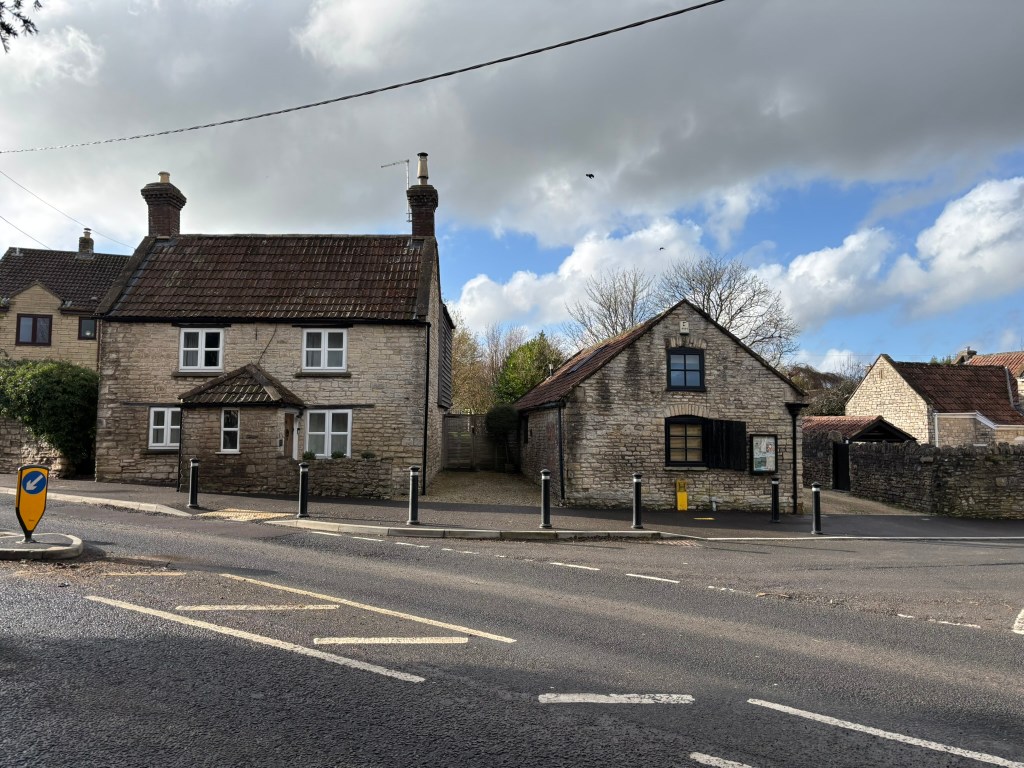
It is particularly exciting to stay in “The Forge” which is where Edward Dando would have worked right up until he emigrated to Australia. Based on the 1851 census there were 2 blacksmiths in Marksbury, and the forge is on the main road close to passing traffic and customers passing through Marksbury. Its been used as cottage accomodation for many years and is lovely place to stay for a couple of days.
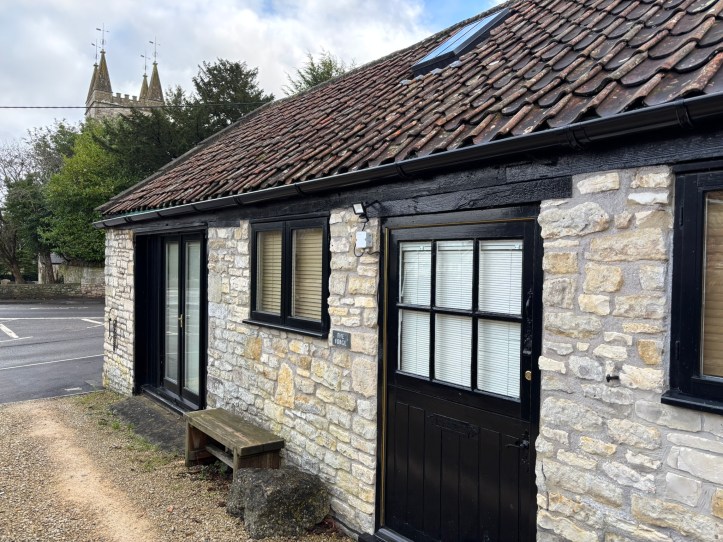
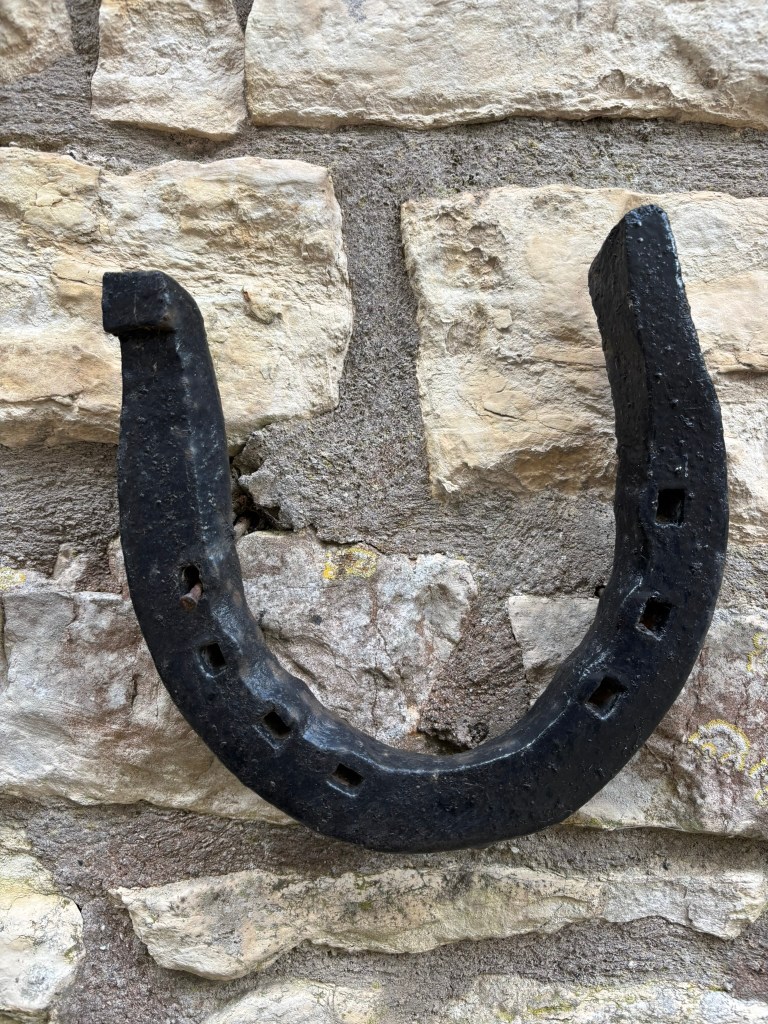
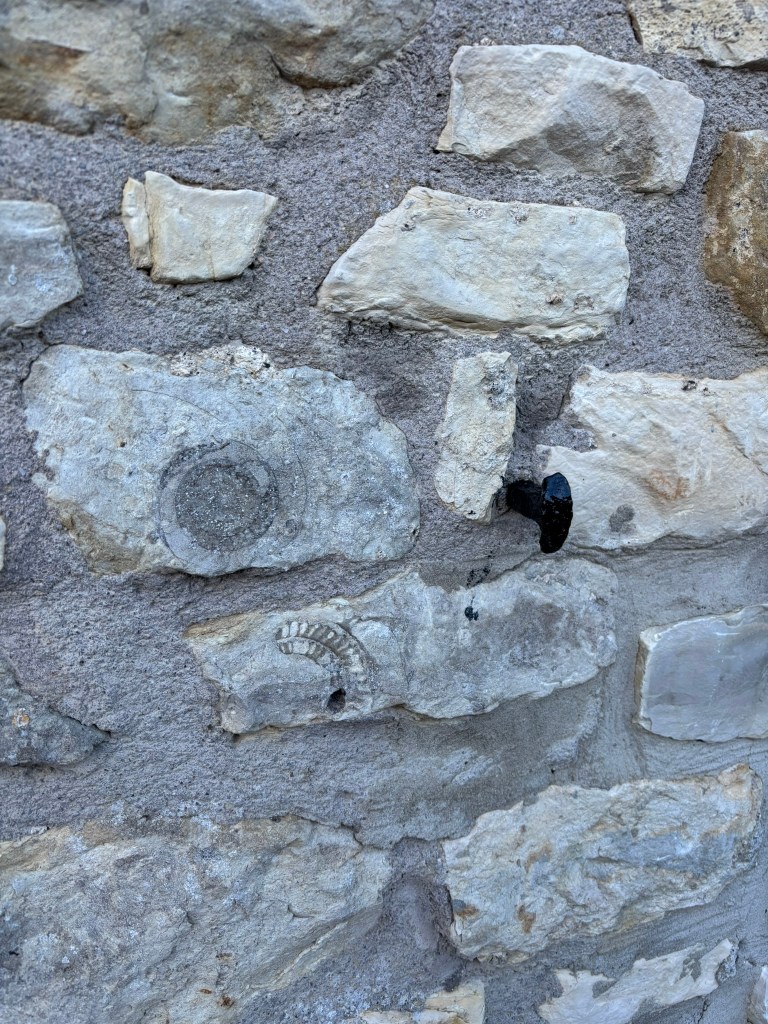
The more I looked closely at the building, the more details and relics from the buildings days as a blacksmiths forge there were to see – including a few iron implements attached to the end of the building (see left of photo above and detail in the gallery below) and most importantly the large horseshoe for a working horse attached to the wall at the rear of the building. Next to the front door there is also an iron peg embedded in the building and a circular fossil? and another fossil or mini-carving? in the bricks next to the door. Even the front door is a split door, the kind used for stables, although the door must have been replaced since the 1850.
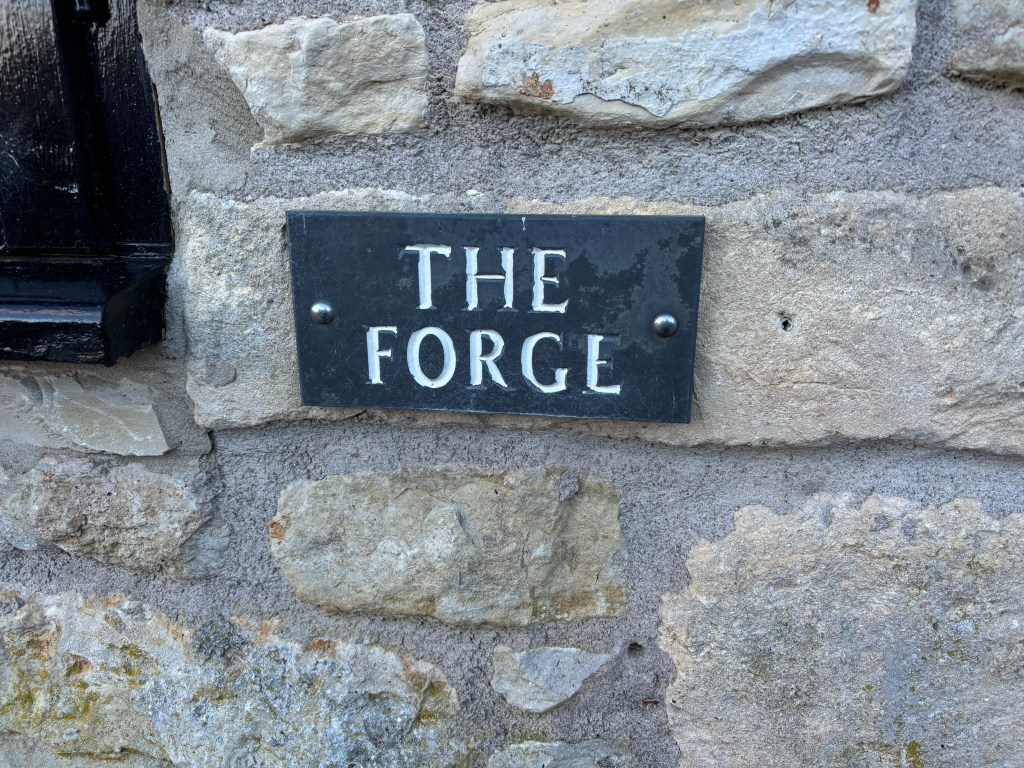
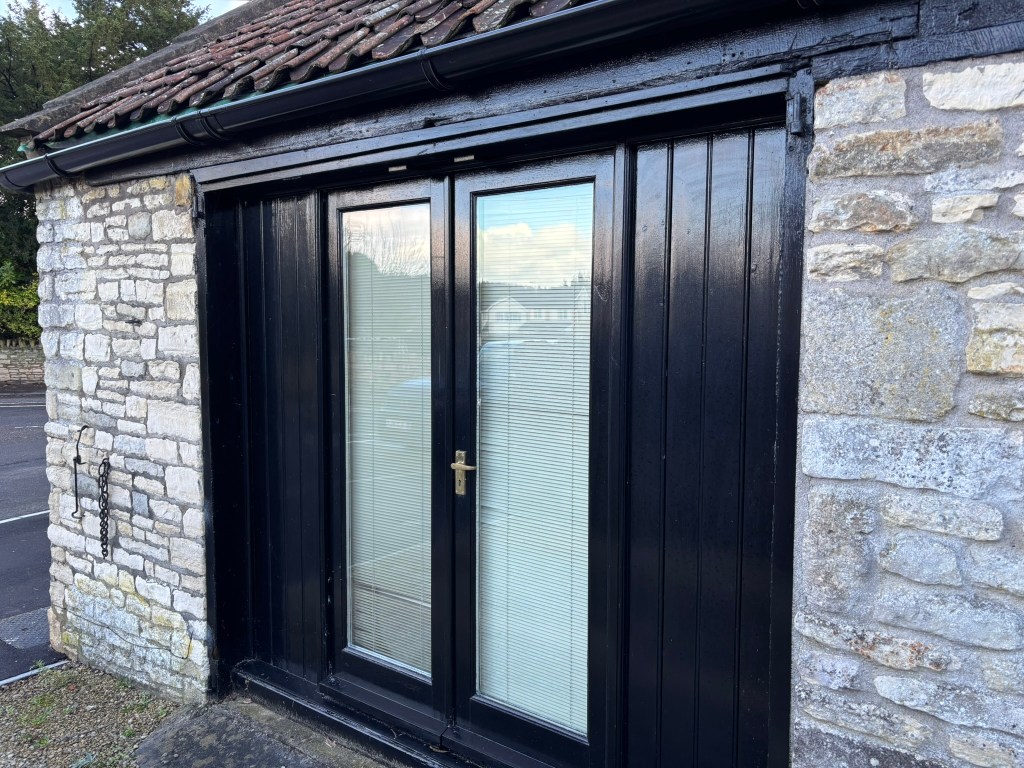
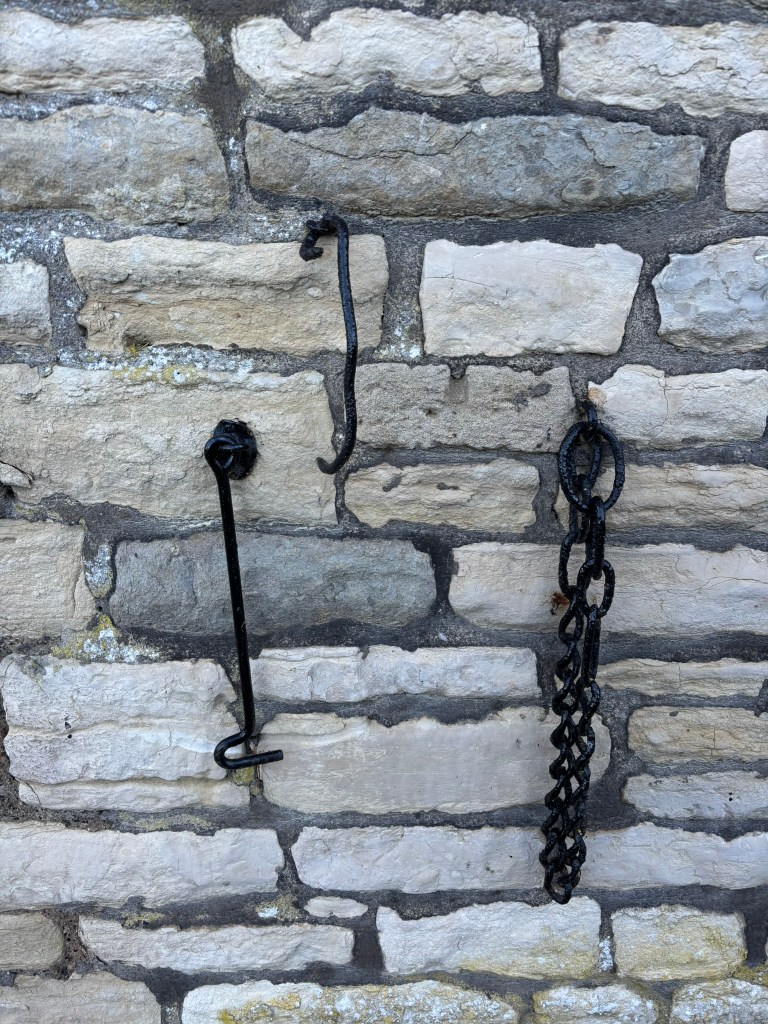
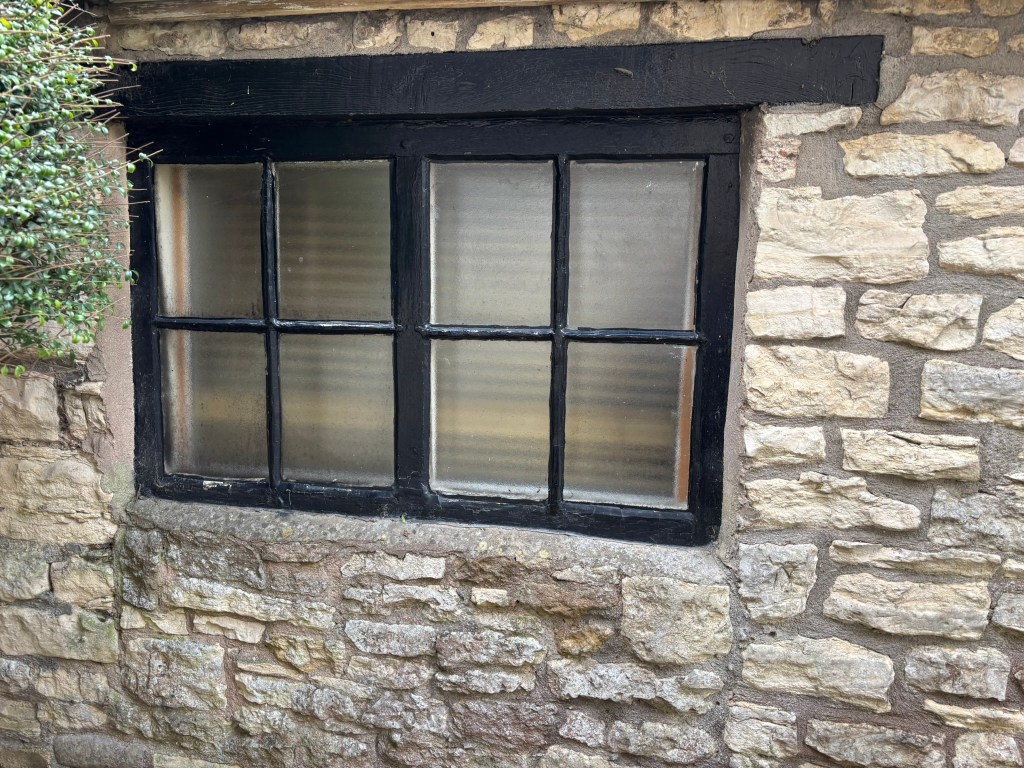
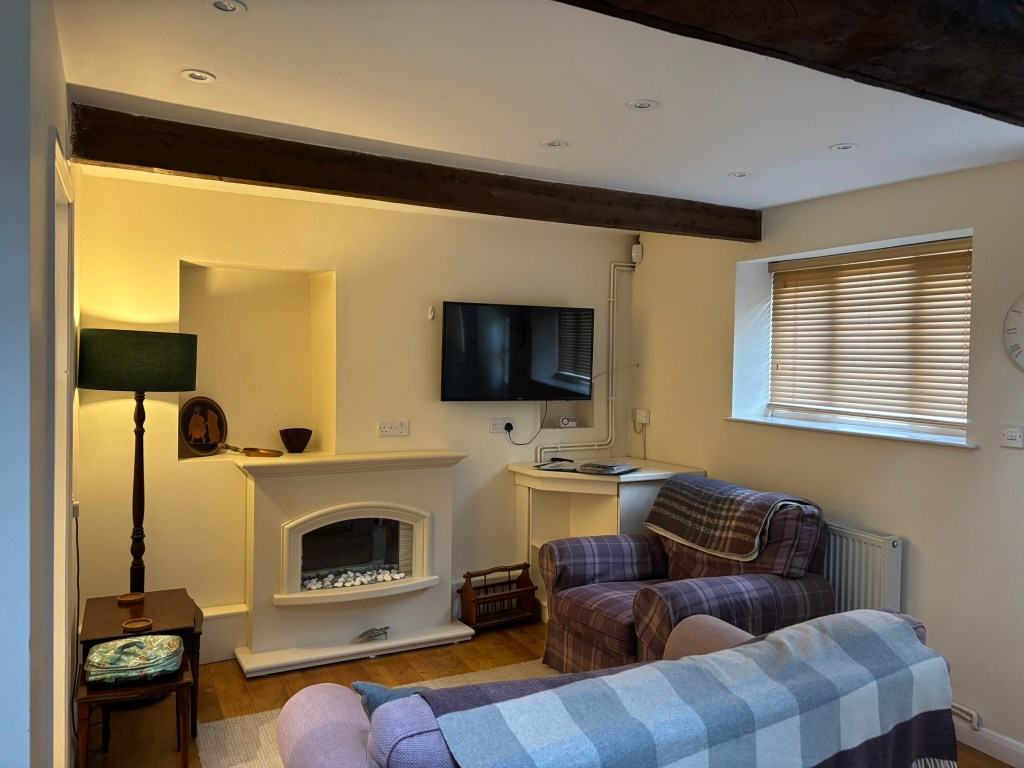
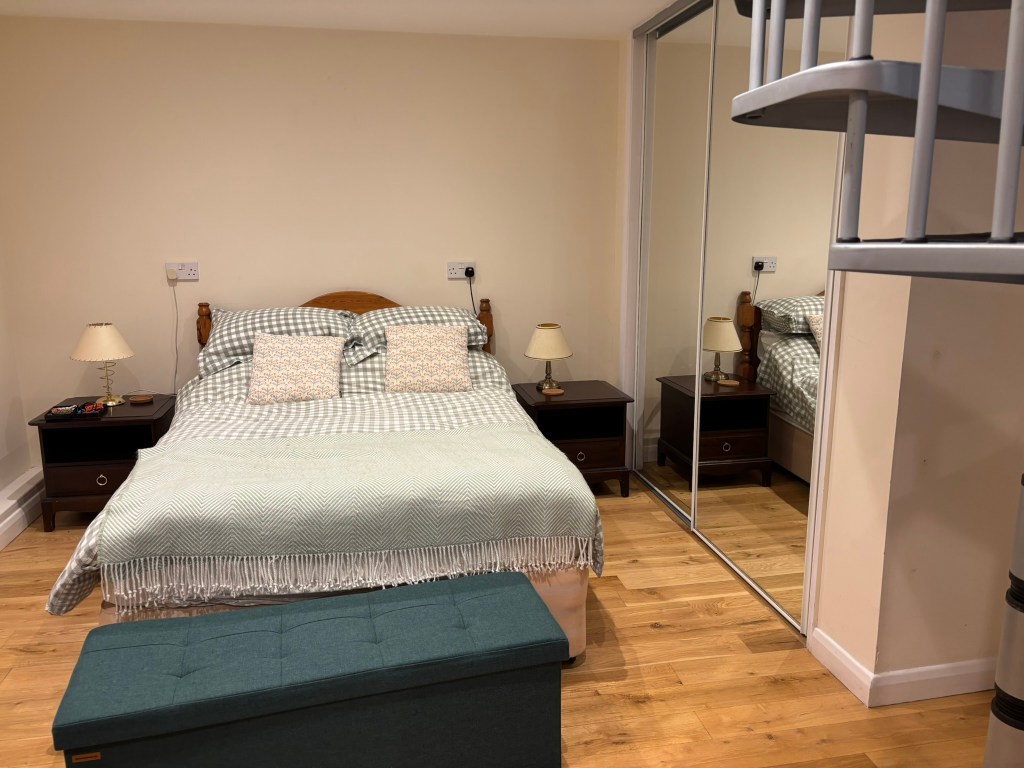
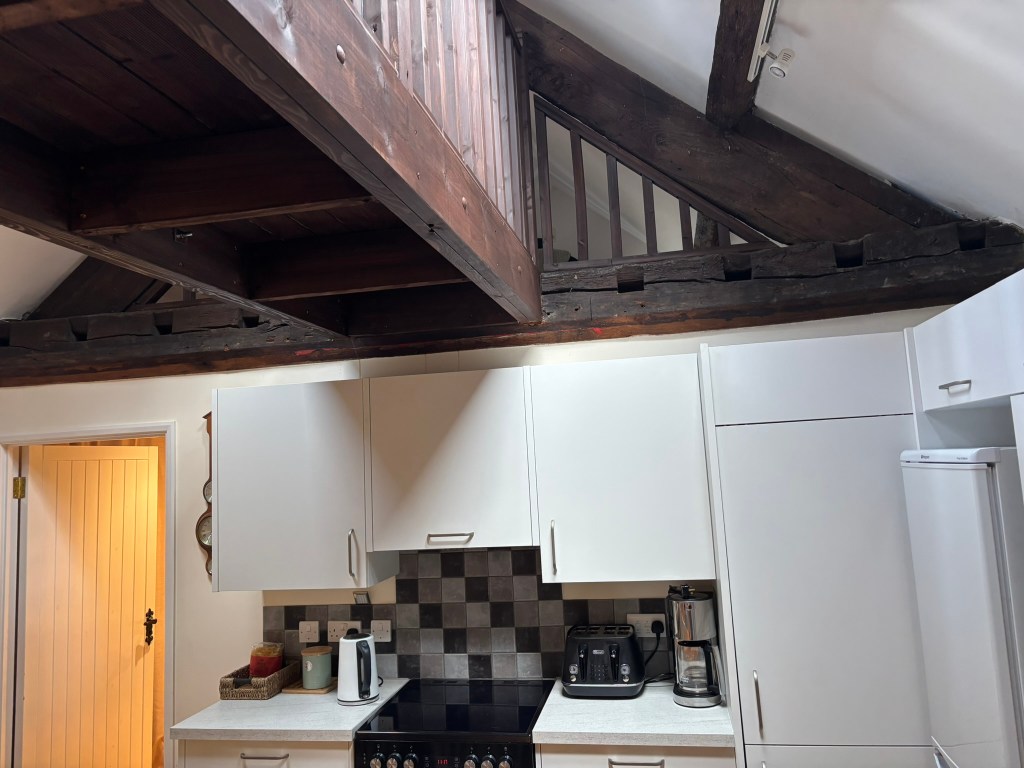
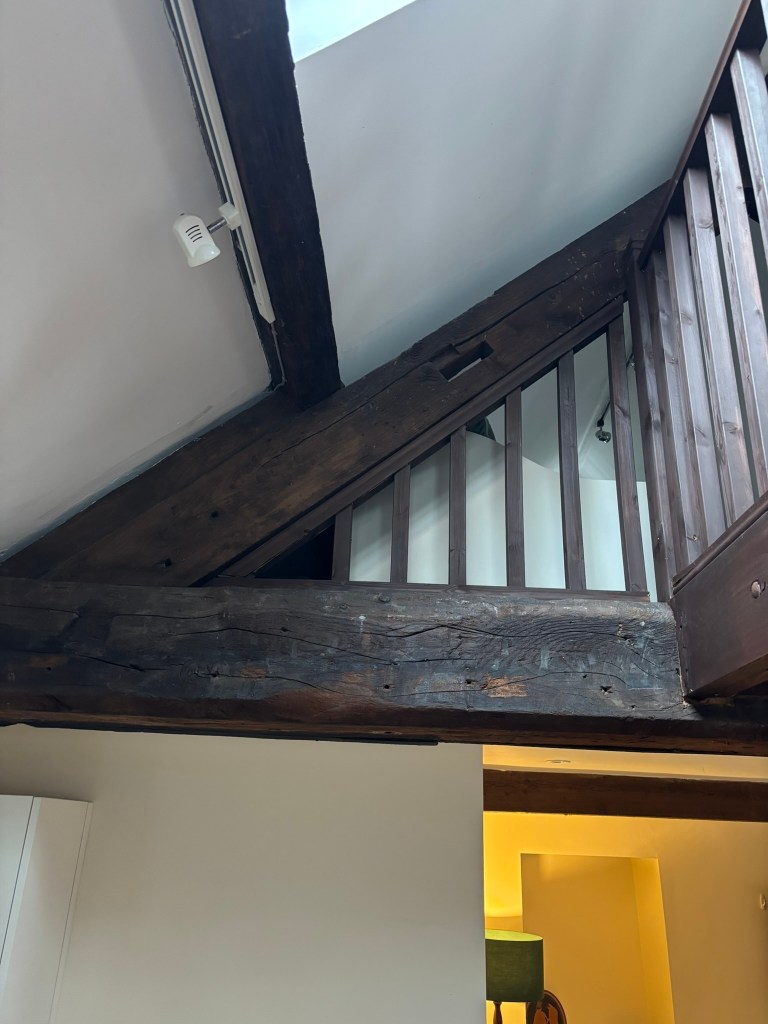
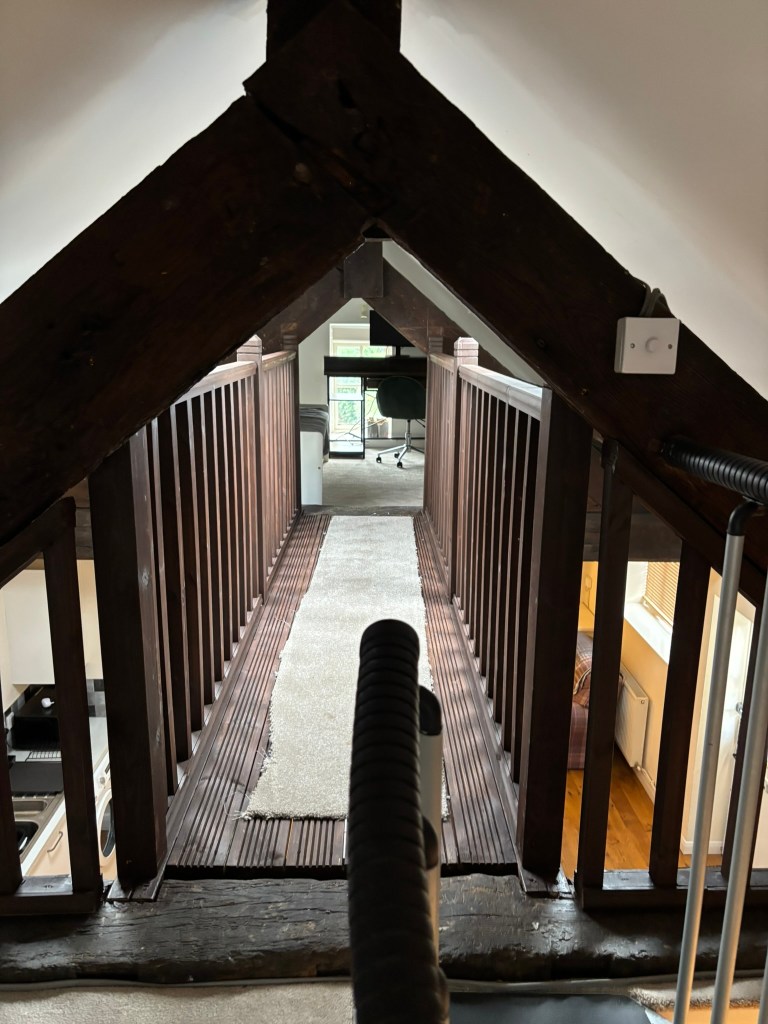
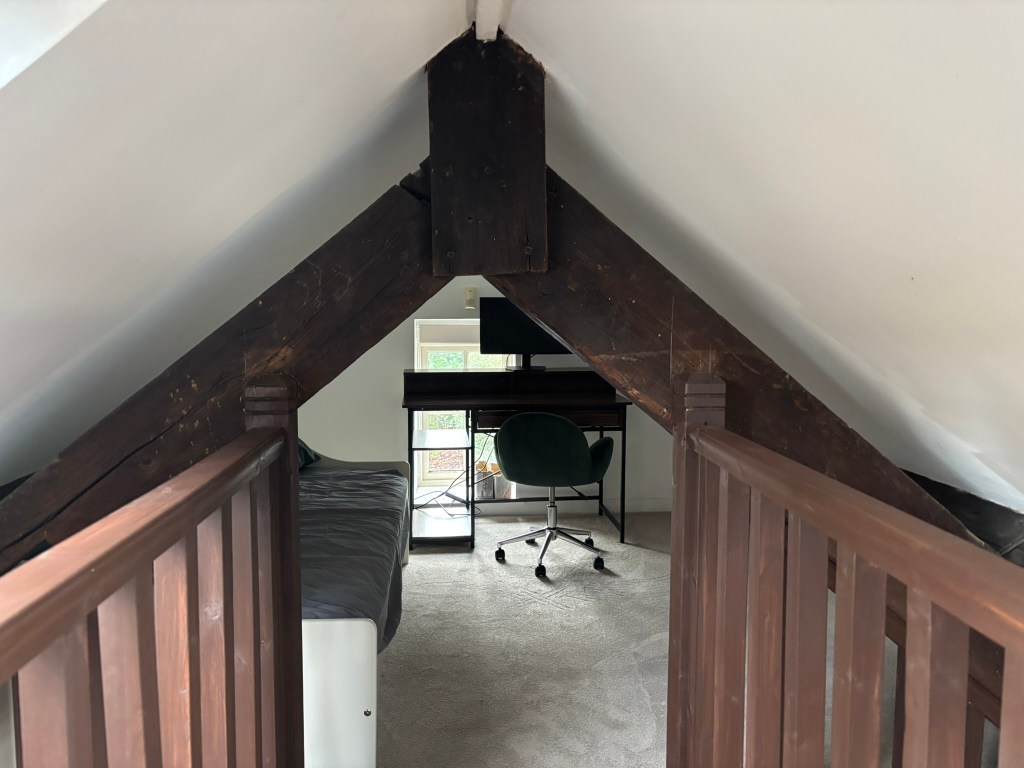
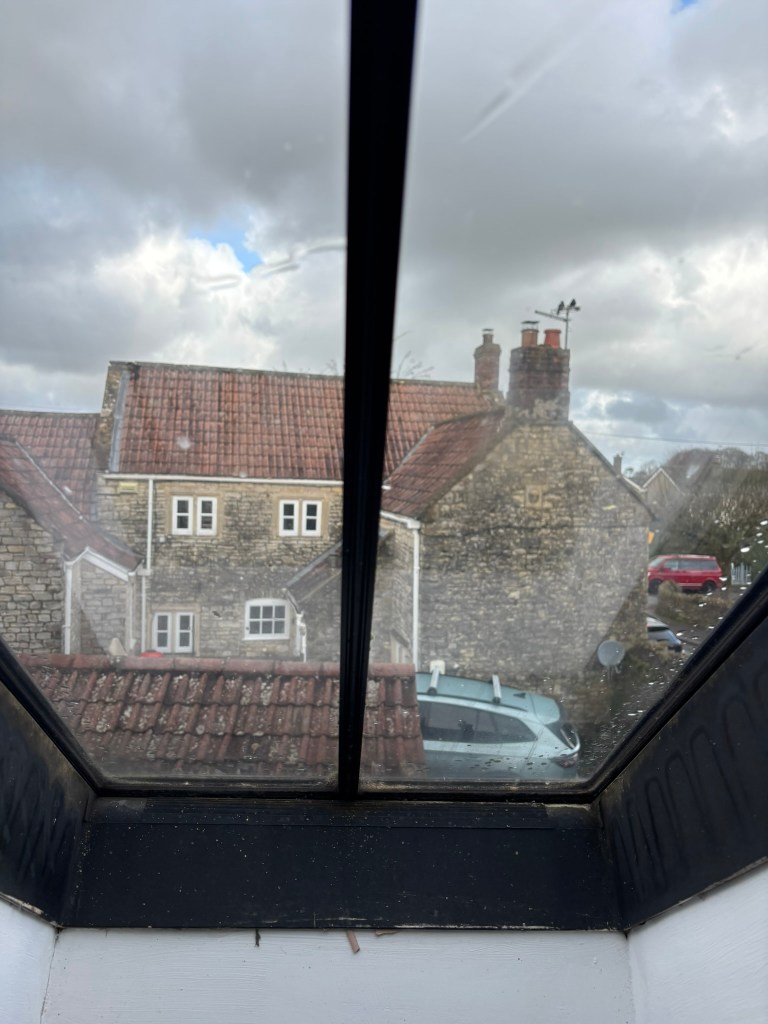
Inside its a lovely cottage with big interior exposed beams that are clearly original. It has a nice kitchen and lounge area in the middle with a fake fire that is (thankfully) a working heater. There is a circular staircase in the bedroom that leads to a small attic office room and a walkway that runs over the main living area to a 2nd small room. There are skylight windows in the roof that you can reach from the overhead walkway and look out to the house nextdoor that is also from the 1600/1800s. There are 3 radiators which run every night and morning and do a good job of keeping the place cosy, but after wandering about in 1-5C with rain and wind, there is also a nice selection of rugs and blankets to warm back up with.
I brought with me a printout of the 1851 census of Marksbury which lists all the occupants of the 57 houses in Marksbury at the time, their age and gender, relationships, occupations and place of birth. This page shows John Hapgood is a Labourer aged 61 and Elizabeth Hapgood (nee Shore) aged 59 living at “21” Marksbury with their youngest son Edward who was 13 and also a labourer (the D means “ditto” or “as above” and saves the census writer a lot of time).
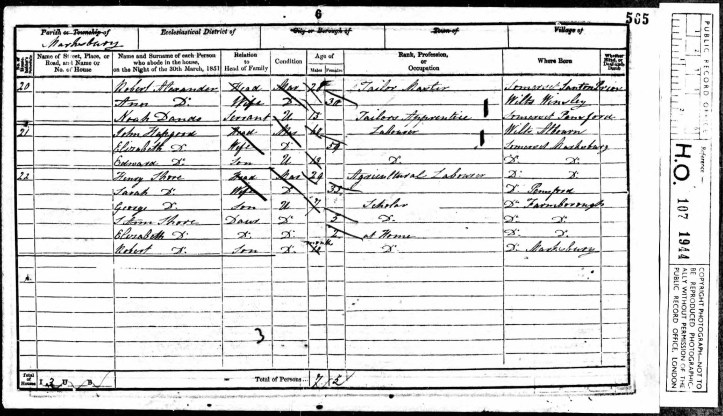
The 1851 census has the following entries for Hapgood, Hanney, Shore and Dando family members. I have added the maiden names of the women because there are more family inter-connections through the Hanneys and Hapgoods there also. (And as a modern woman the erasure of women’s name annoys me!). Bold means one of my direct ancestors.
- #21 John Hapgood & Elizabeth Hapgood (nee Shore) Agricultural Labourer (4th G Grandparents, parents of Thomas Hapgood)
- #28 Richard Hapgood & Elizabeth Hapgood (nee Derry) Agricultural Labourer
- #29 William Hapgood & Susannah Hapgood (nee Payne) Agricultural Labourer
- #32 Charles Hanney & Hannah Hanney (nee Branch, & parents of Hester Hanney) Thatcher (4th G Grandparents)
- #33 Edward Dando & Susannah Dando (nee Hapgood) Blacksmith
- #46 James Hanney & Hannah Hanney (nee Hapgood) Labourer on the Roads
- #50 Elijah Hapgood & Sarah Hapgood (nee Dixon). Agricultural Labourer
I had hoped that “21 Marksbury” was the same as the current house numbering, but the 1861 census lists the families in a similar order but backwards – so John and Elizabeth Hapgood are listed at #21 in the 1851 census and at #46 in the 1861 census out of a total of about 60 houses. Charles Hanney & Hannah Hanney are listed at #32 in 1851 & at #35 in 1861. I can’t imagine they moved that much (although if all the houses belonged to court farm then it’s possible there was a lot of shuffling of families as they grew and shrank). I had the opportunity to book a virtual Q&A with Gillian Blanchard at a Virtual Family History conference in Sep 2020, and she explained that for a small village like Marksbury, the census collector most likely would start at one end (the Rectory) and walk the streets and number as they went. The ennumerator number may be in order/sequence of the houses in the street but not always. A decade later, the next census taker may take the same route or a different route – the key is to look for landmarks in the houses and line it all up.
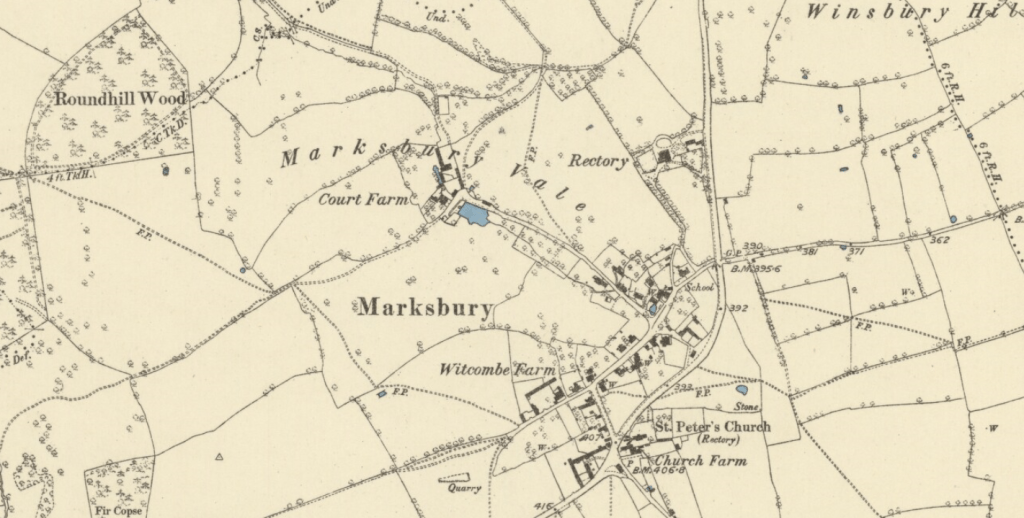
The 1851 census taker started at The Rectory (slightly out of town to the North) and this was #1, and then went straight to Court Farm at the end of the lane (home of the Harding family who invented Cheddar Cheese processing, NW of the centre of Marksbury ) and this was #2. The final entry was Widcombe Farm (at the very edge of town to the west). It seems that they generally listed the houses in order, because the 1861 census has the same approximate order for the families but in reverse, and Court Farm appears last in the later census and Widcombe farm earlier. The 1861 census collector it appears went the opposite way to the 1851 man. So we can establish that Charles and Hannah Hanney lived somewhere “in the middle” of Marksbury, and John & Elizabeth Hapgood lived somewhere closer to Court Farm. Edward Dando the blacksmith also lived somewhere “in the middle” which fits with the Forge being in the middle of the village also. The Forge is part of the property of the house next door so perhaps this was the main house?
Walking around it’s clear that most of the houses are all still here, with a couple of new houses in the middle of the village and small well-established developments at Whitcombe farm. The houses are all stone with stone walls and close to the road, and the chimneys are the best way to tell which are old houses and which are newer but in a similar style. The roofs are all tiled but presumably were thatched in the 1800s as there is a Thatcher in the census. It’s all picturesque and you really do feel like you are walking in a timewarp, seeing the same houses and sites as your ancestors – but with cars instead of horses and better sanitation. For the Australians reading this – it reminded me of the book “Playing Beattie Bow” where a young girl walks around a corner in the Rocks in Sydney and is transported 100 years back in time . I wandered around taking photos of everything, and I am sure I must have created some gossip…. who is that odd middle aged woman wandering about taking photos of all our houses?
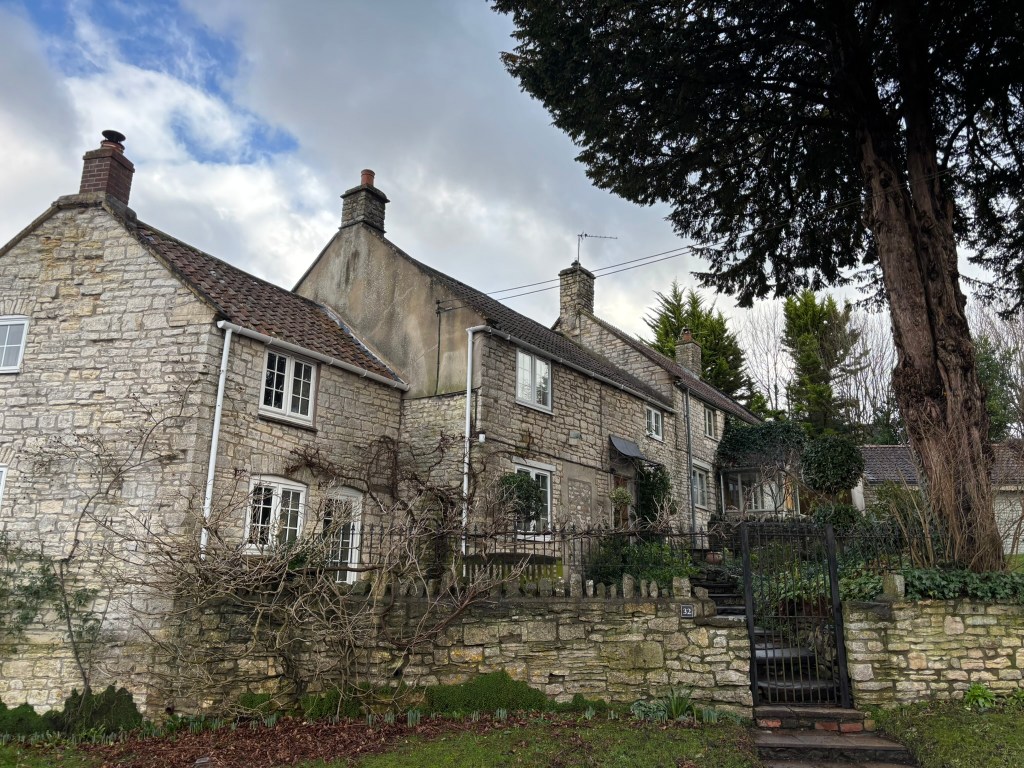
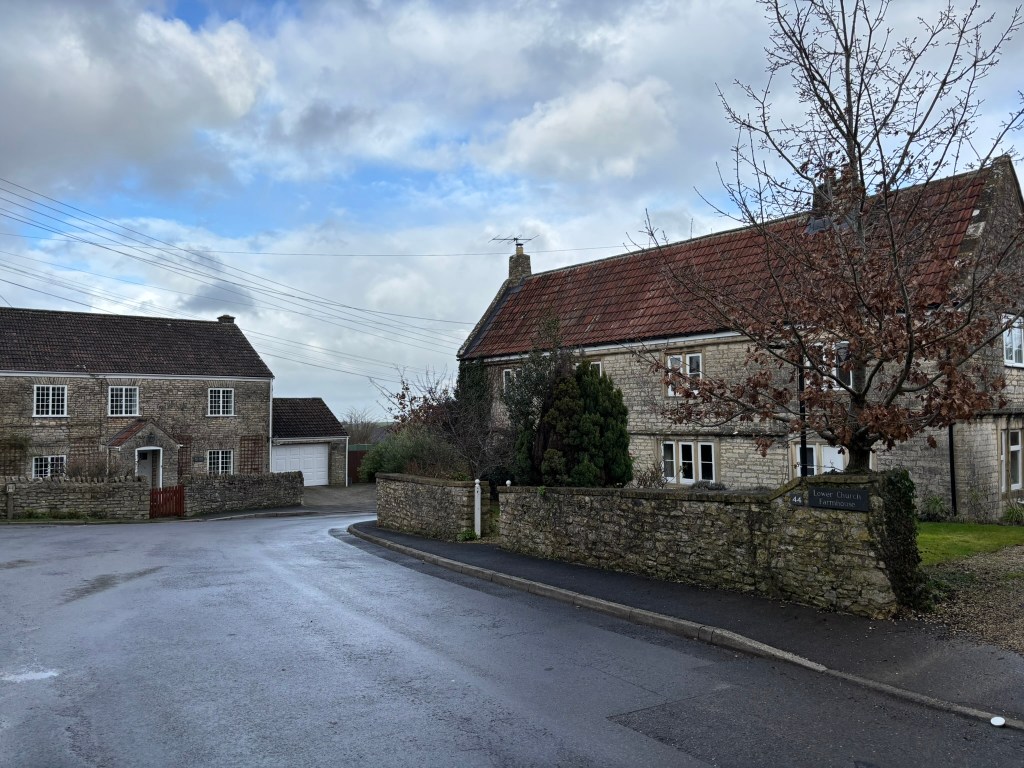
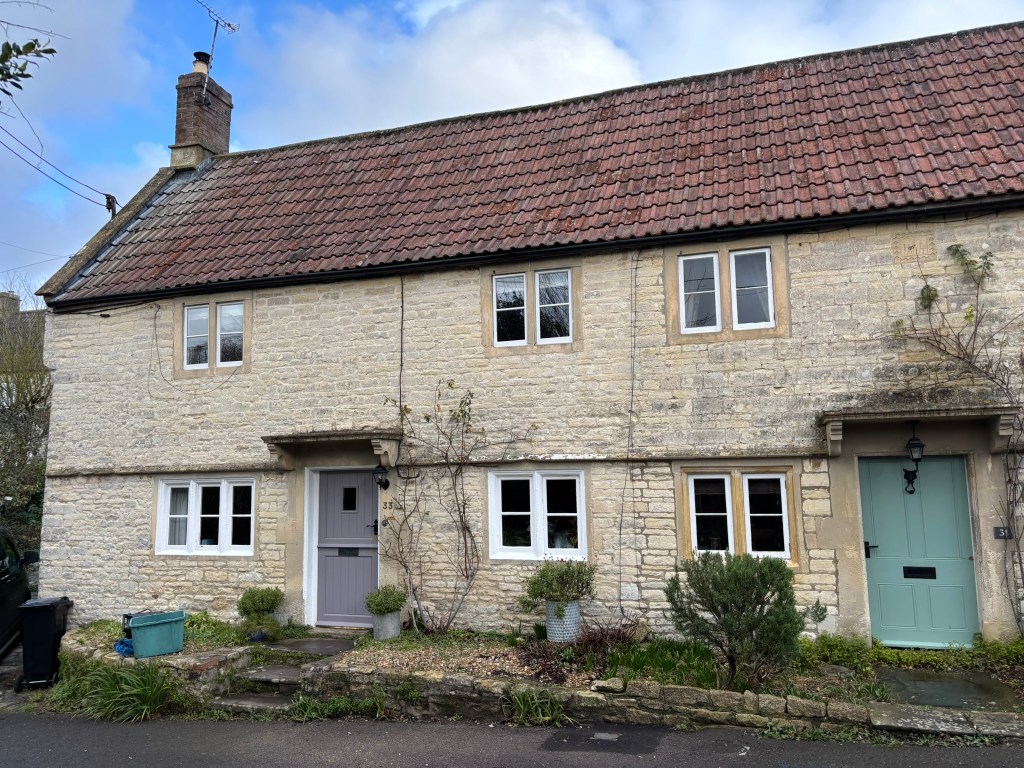
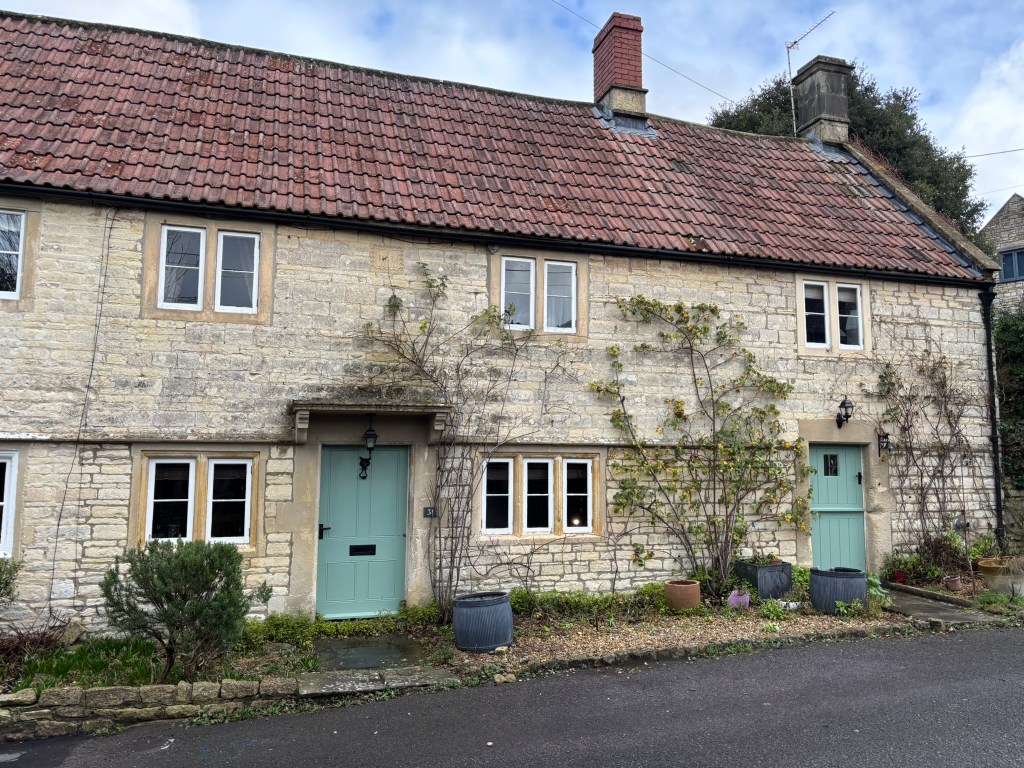
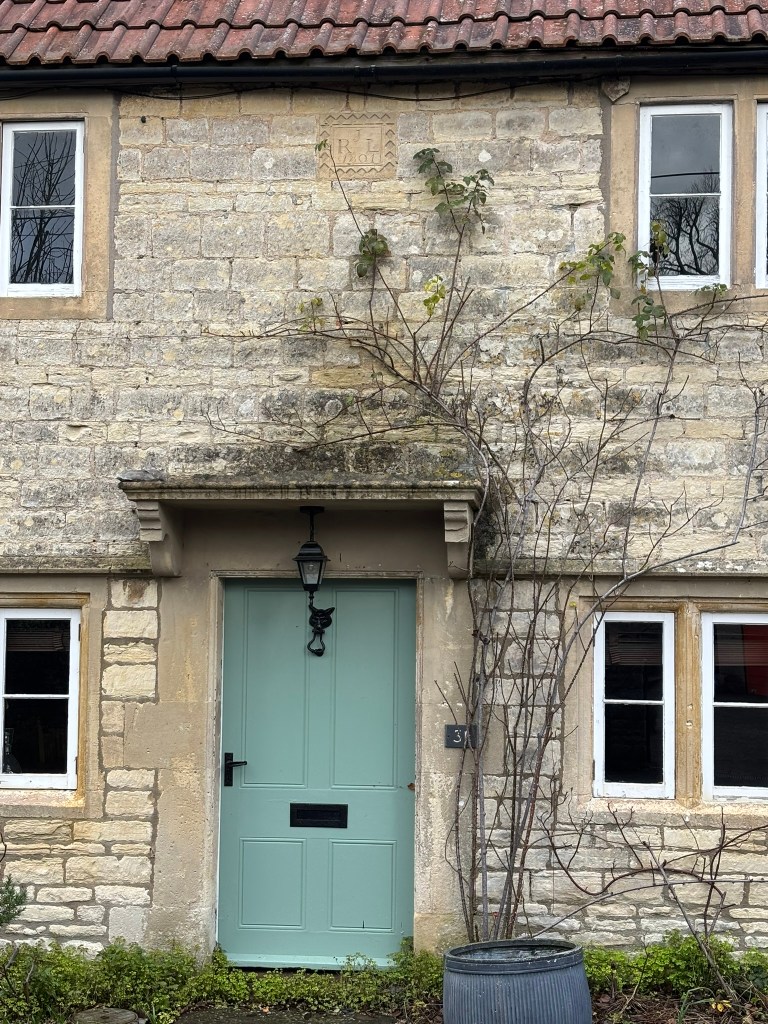
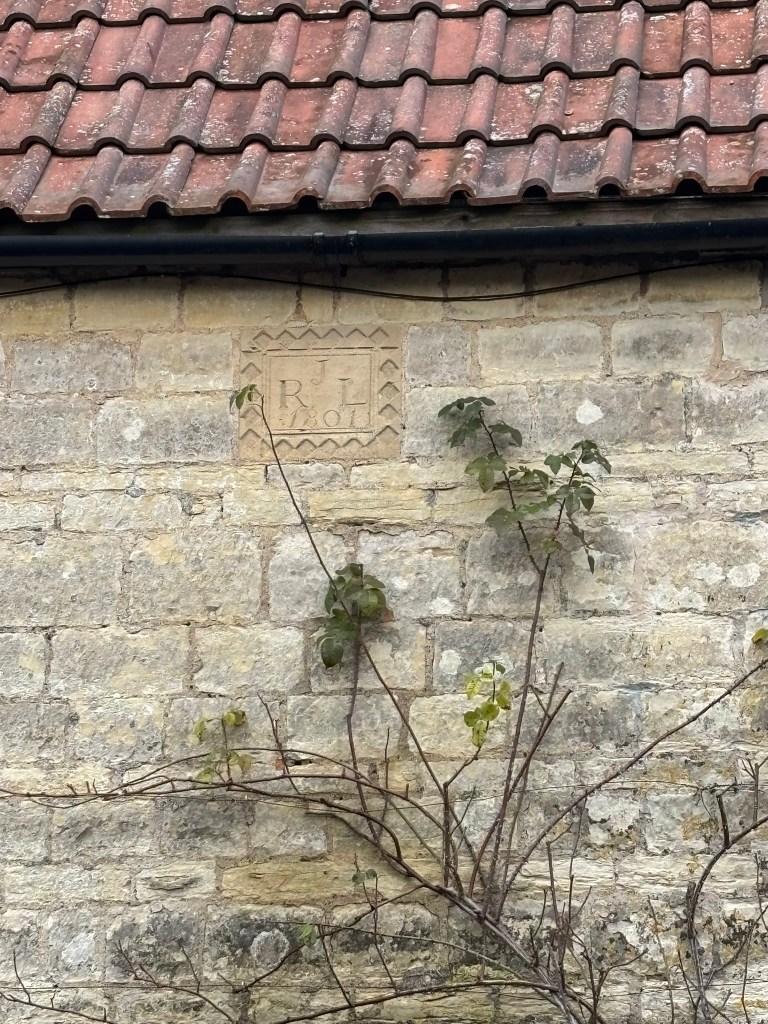
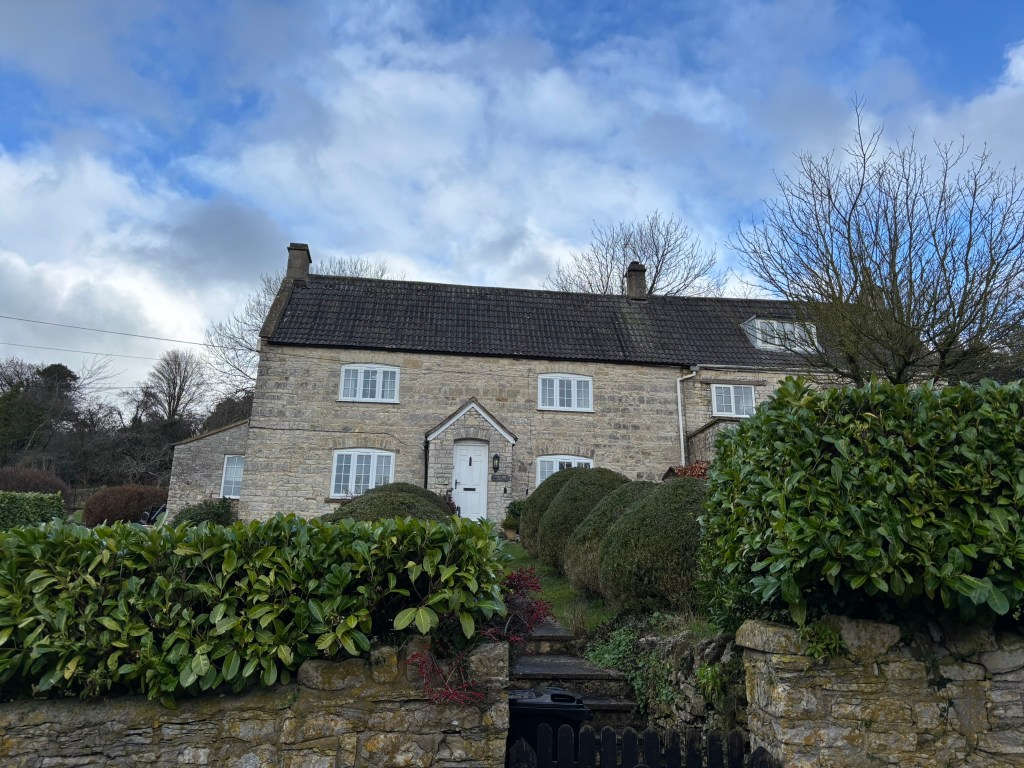
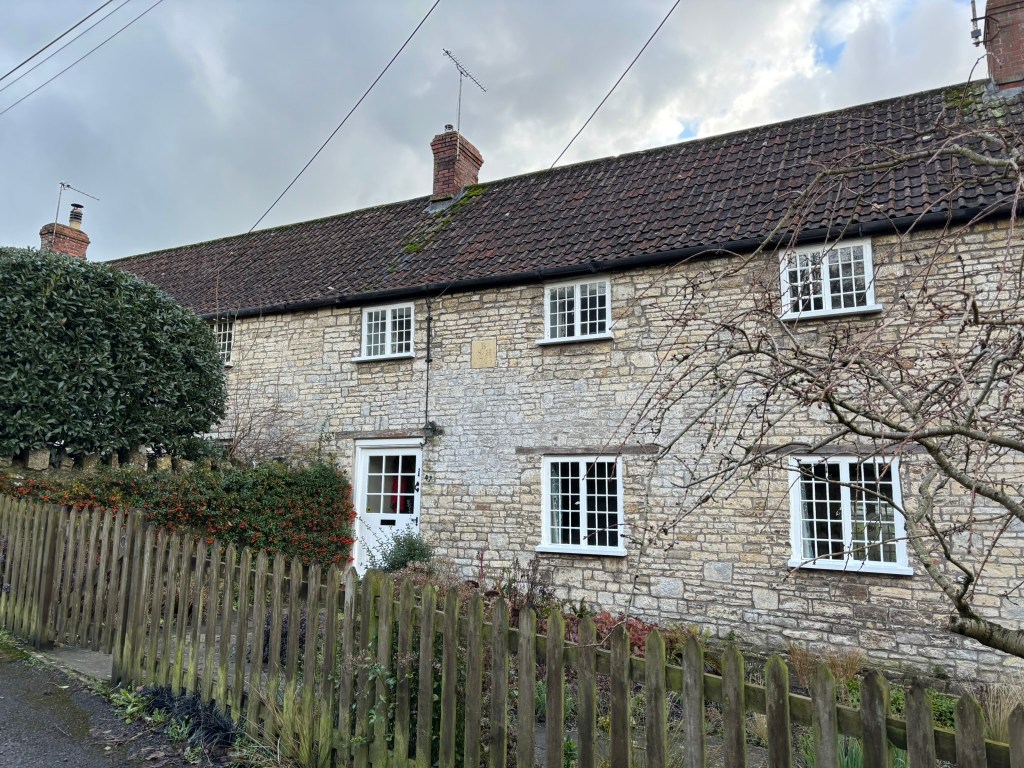
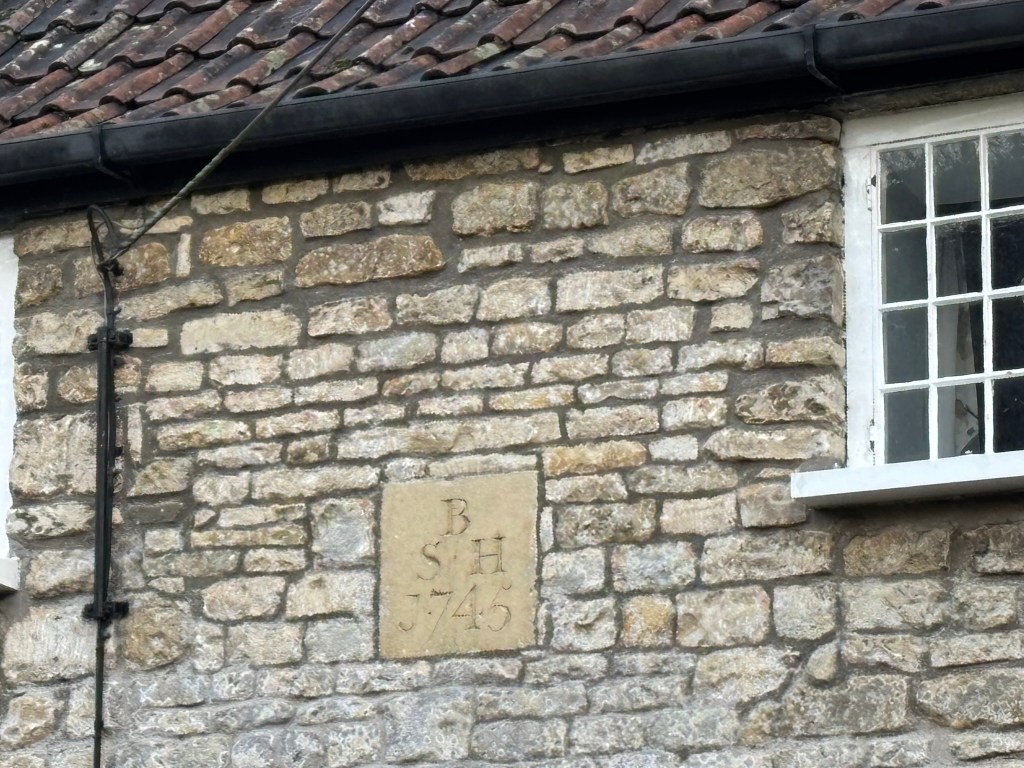
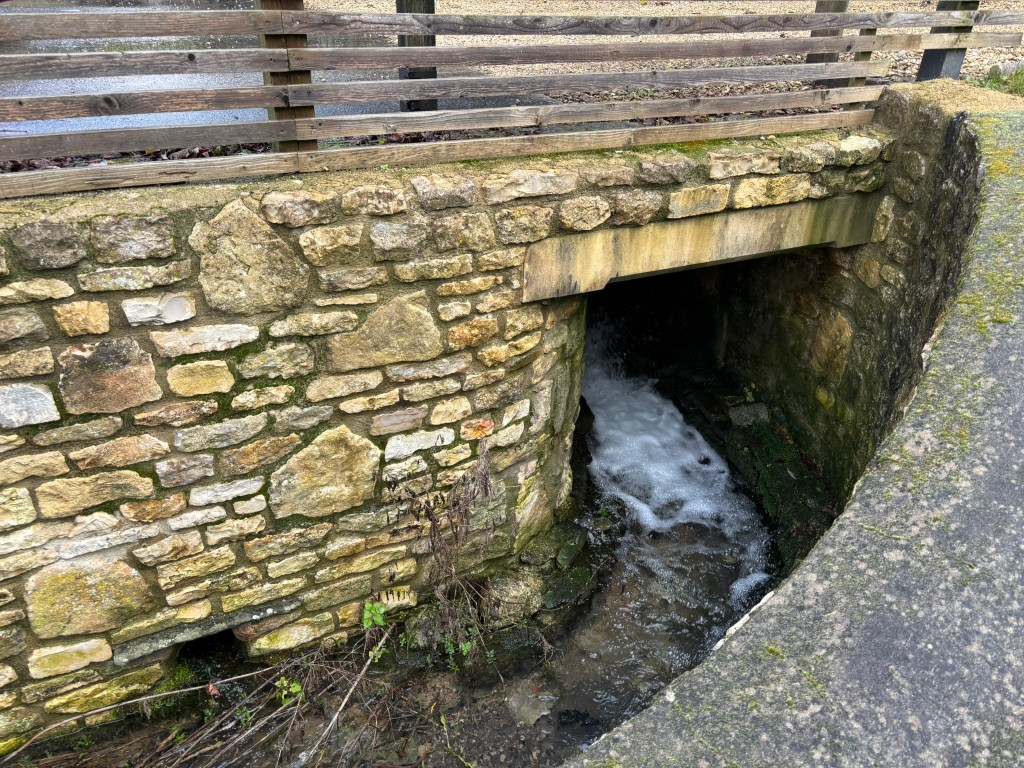
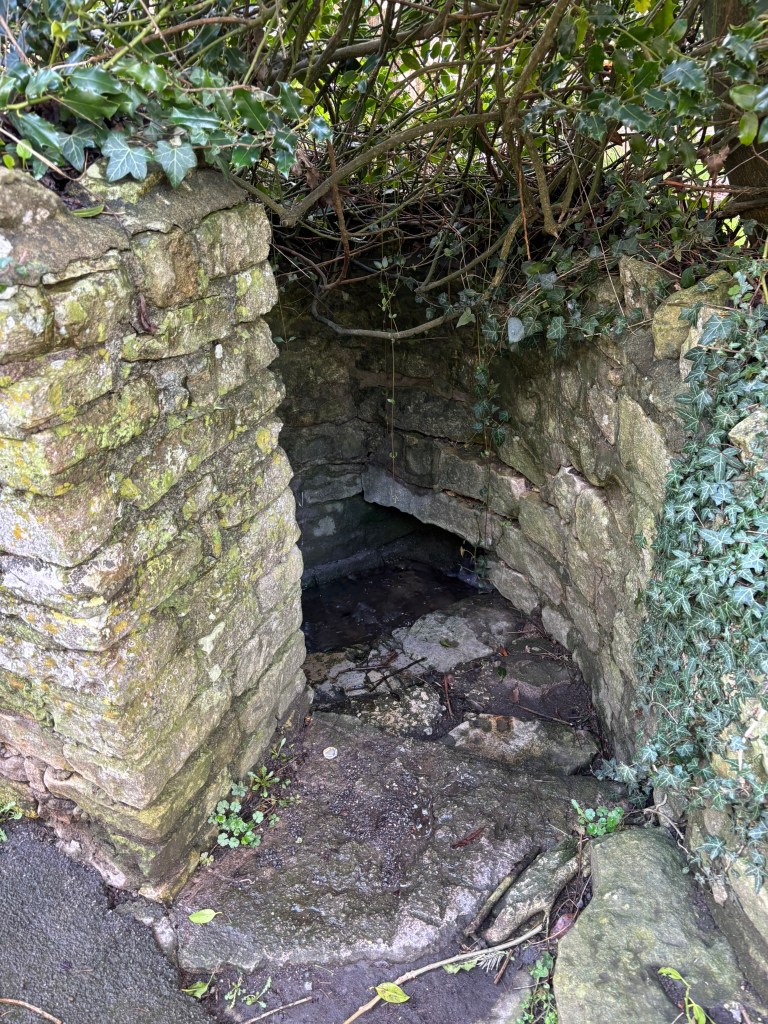
I also walked down to Court Farm, which is where the Hapgoods seem to have mostly worked at Agricultural labourers. Court Farm (aka Vale Court Farm in the 1850s) was (and is?) a dairy farm owned in the 1850s by Joseph Harding 1805-1876. Harding invented the manufacturing process for Cheddar cheese which was more modern and hysgenic (ie safer!) and shared it across the the country. Workers were not allowed in the cheese shed for hygiene reasons. He then moved to Vale Court farm and introduced mechanisation into newly built cow houses [1]. This is likely a contributor to why the Hapgood’s & Hanneys emigrated to Australia, and why they won awards for their cheese in Australia. There are 2 other farms in Marksbury but Court Farm appears to be the largest.
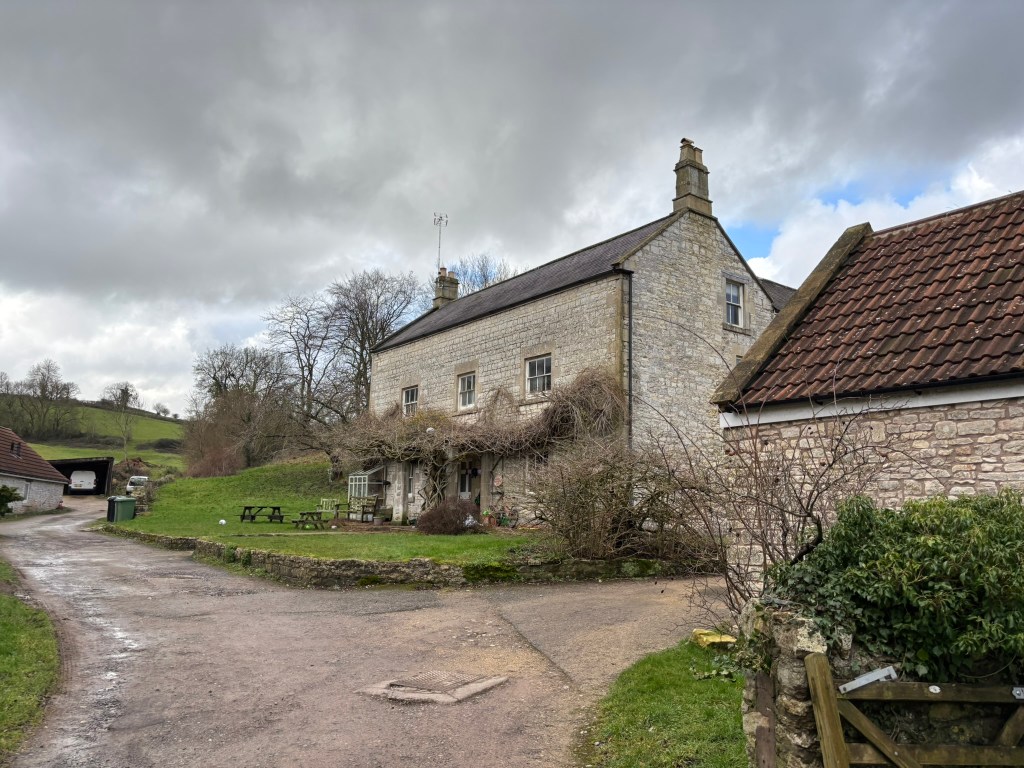
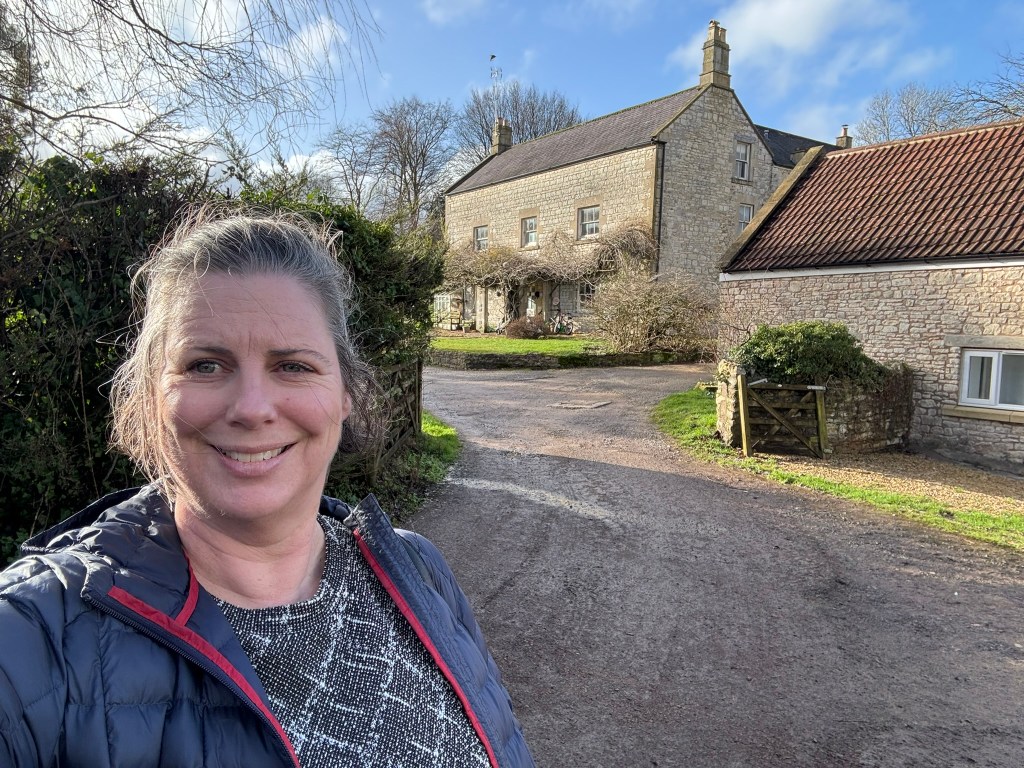
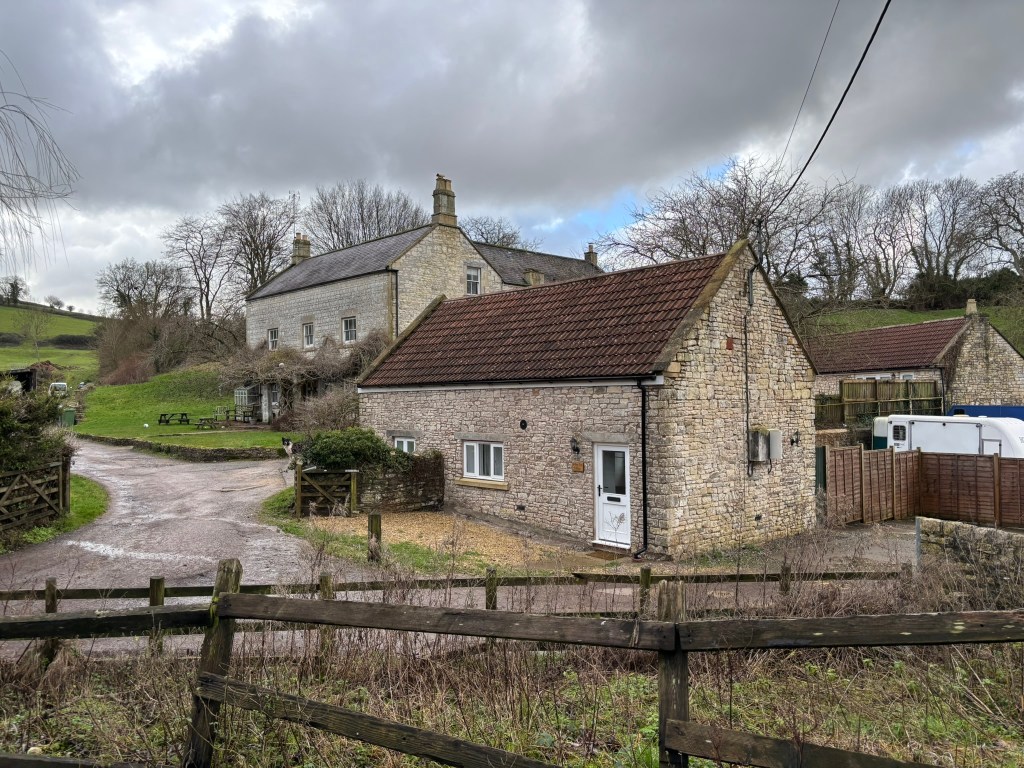
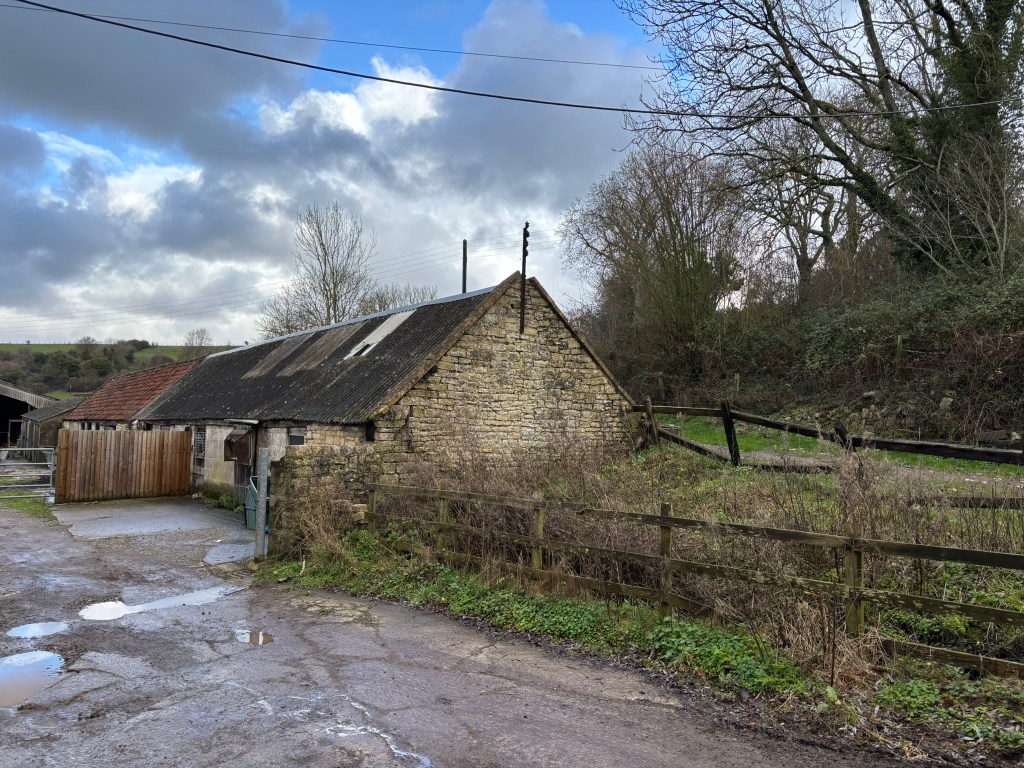
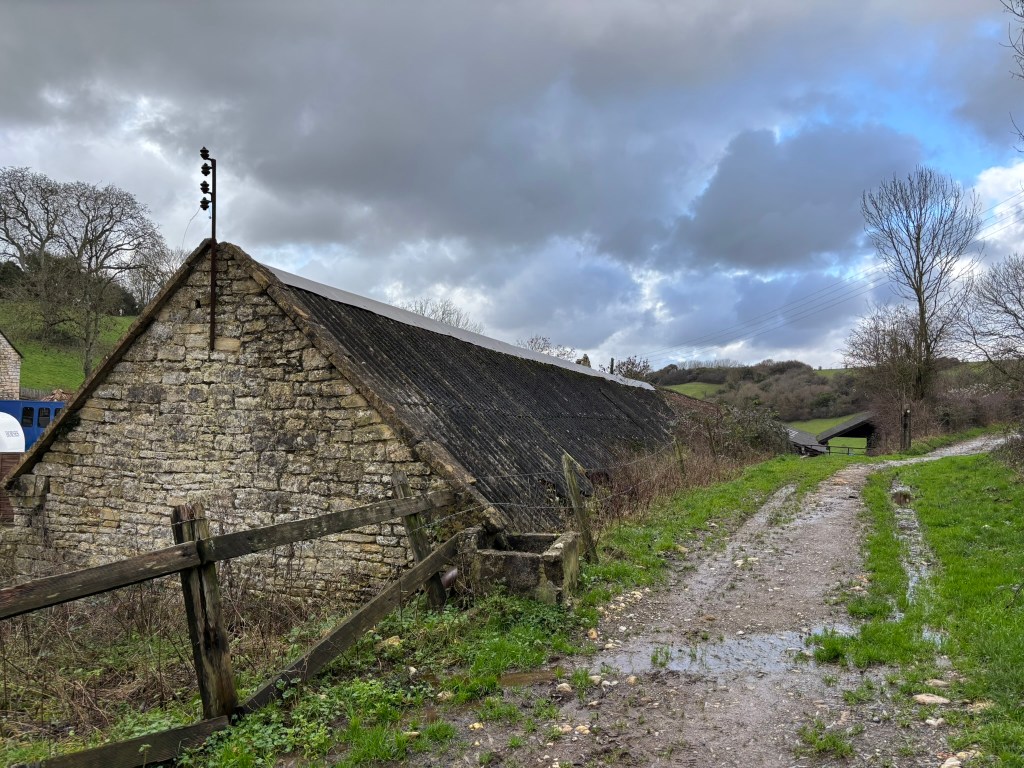
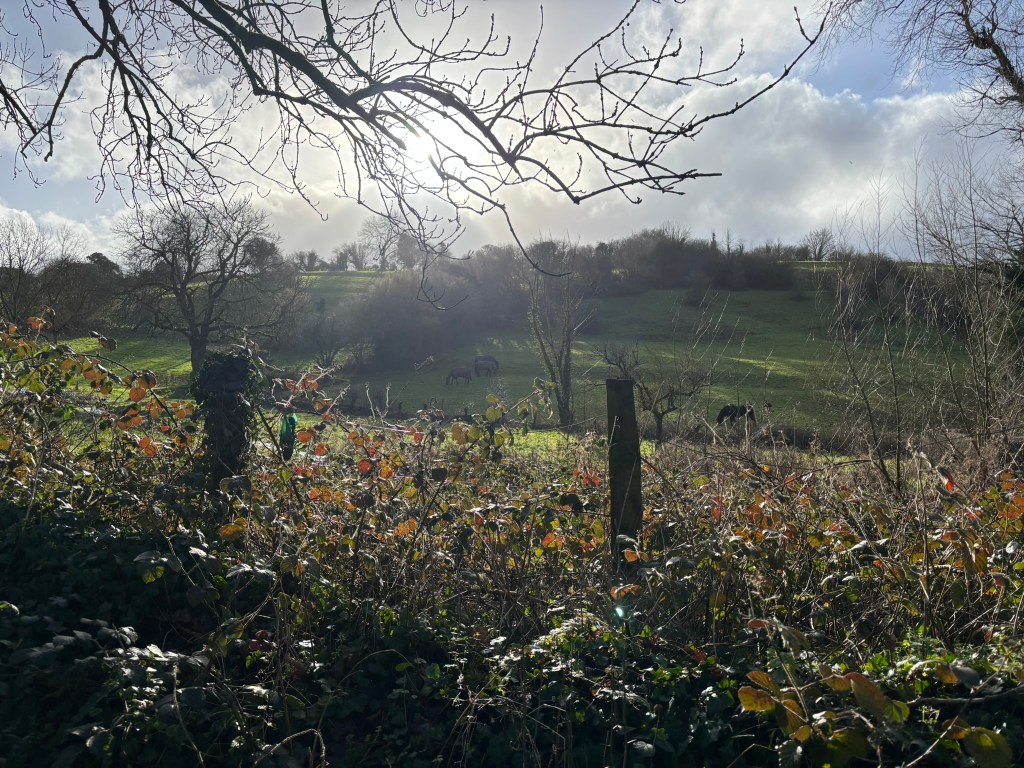
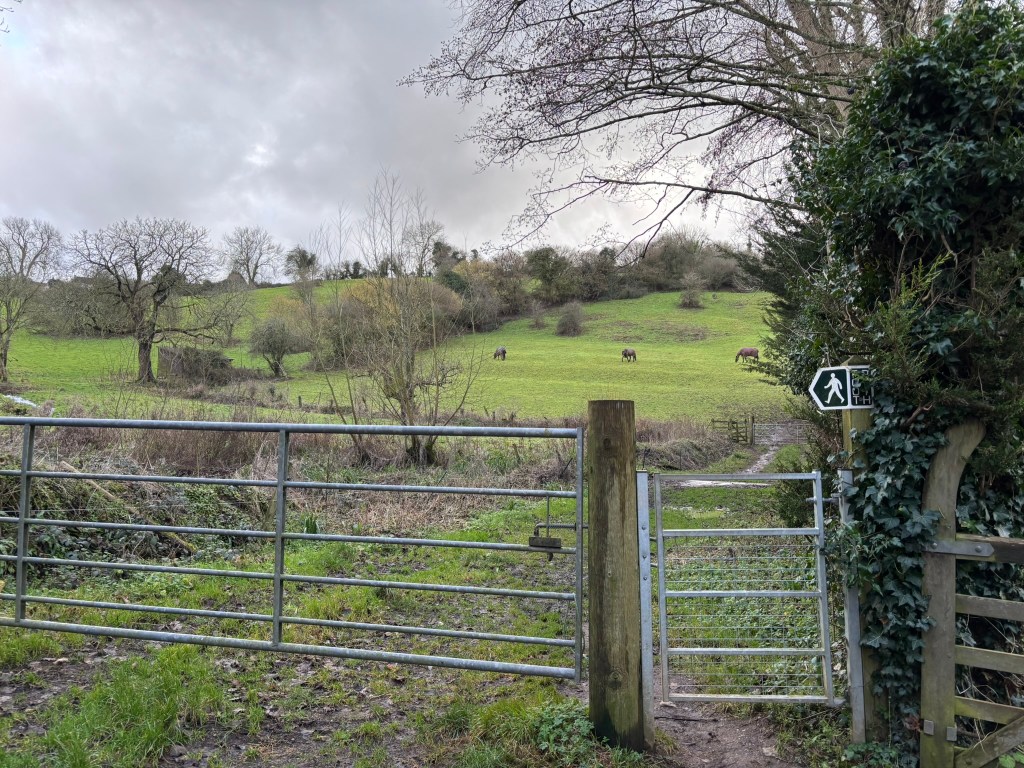
Court Farmhouse is a pretty building with a vine-covered front door and chimneys at either end of the house. A line of low cowsheds along the left of the drive are quite distintive and the surrounding countryside is picturesque. Court Farm is private property, but there are public walking paths branching off the road. It has been quite wet and they were very muddy for my trip – pro-tip for future visitors is to bring gumboots or wellington boots and a walking stick if its likely to be wintery or wet! but I did manage to walk a short way along one of the paths. I had hoped to go for a longer walk exploring the area but it was too muddy for someone travelling for work!
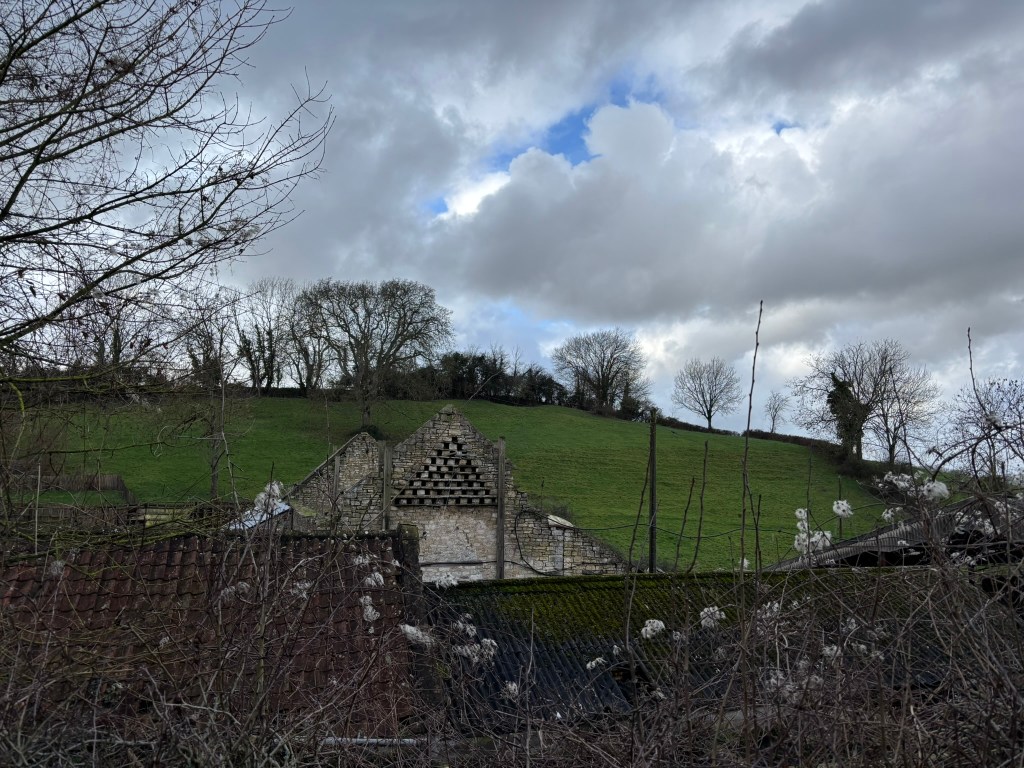
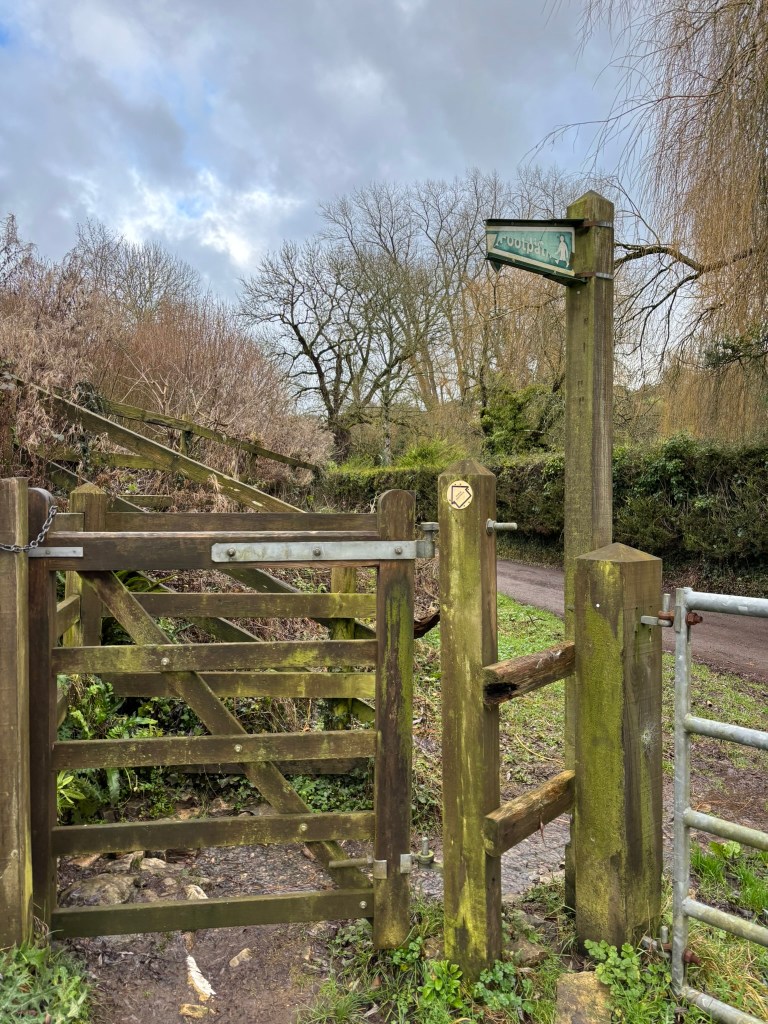
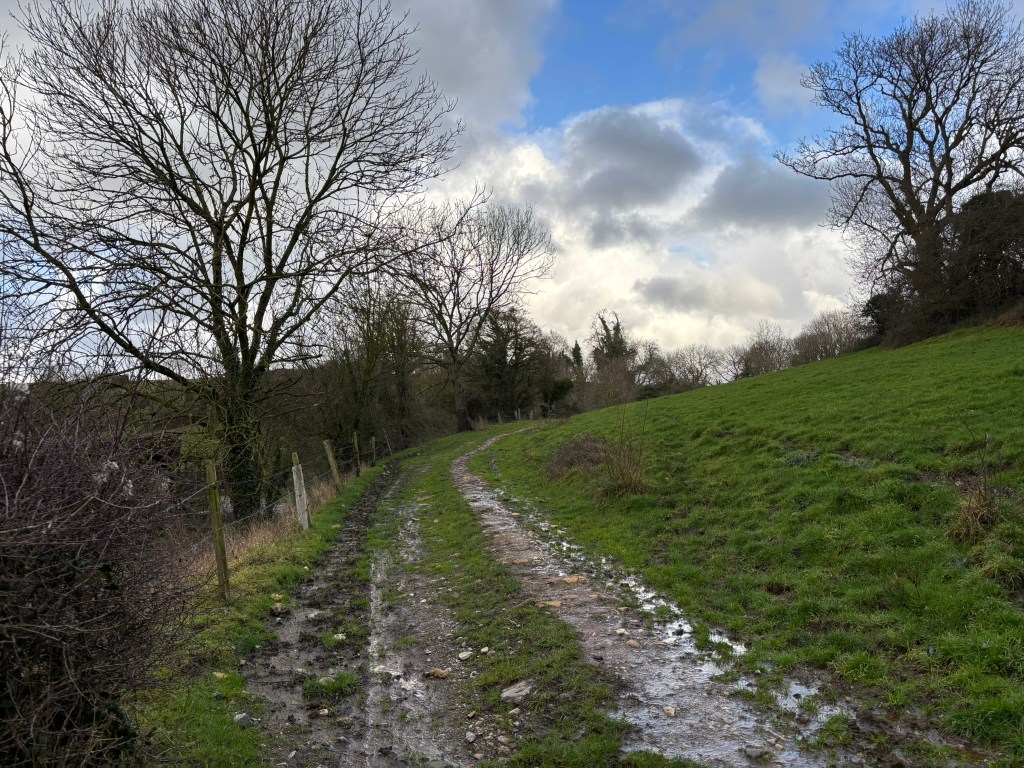
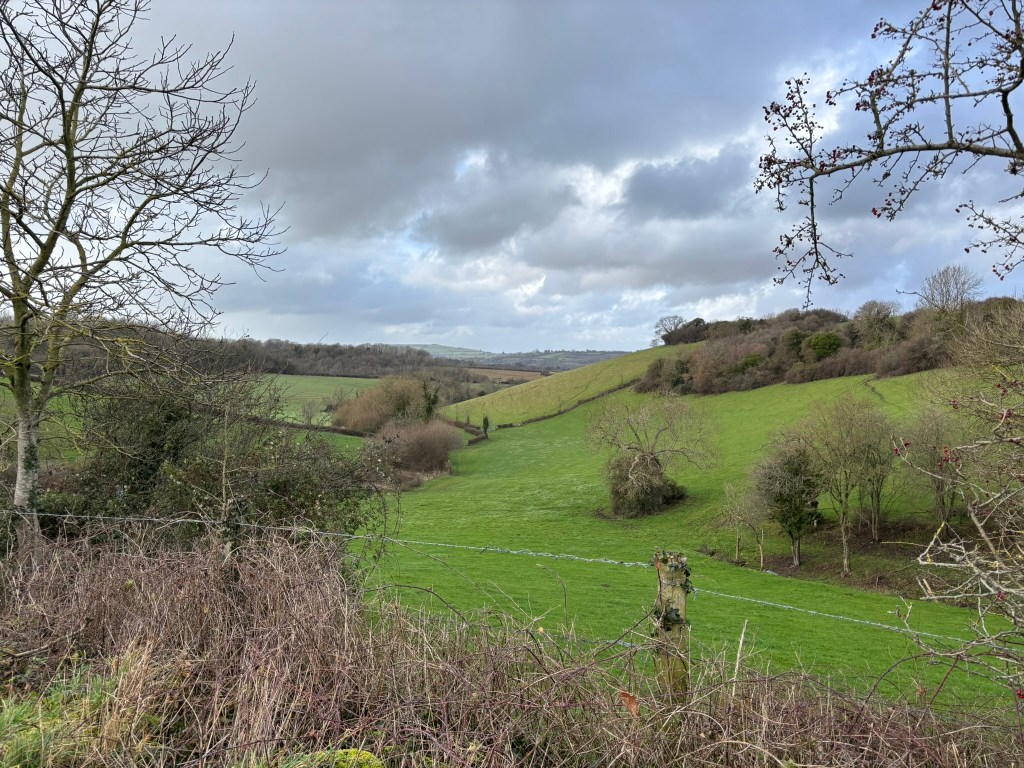
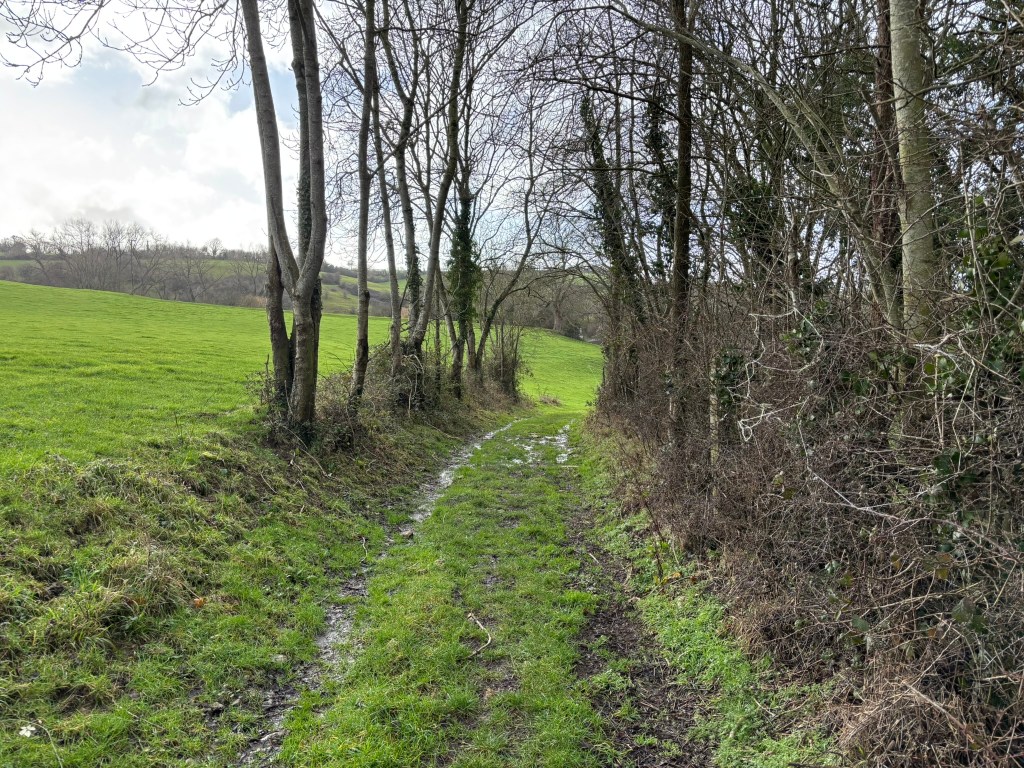
I will do a separate post on St Peters Church and graveyard.
Hopefully these photos give a taste of how lovely it is here in Marksbury and how much I am enjoying my little trip to Somerset England. There are so many things to see here that I have to limit myself to just a few key things. I recommend staying at The Forge (the other option is The Stables which was part of Court Farm). Totally worth it to spend some time here and absorb the historical atmosphere.
IF you are a Marksbury resident – past or present – and have more info please leave a comment or email me at karenhapgood [at) gmail {dot} com
Marksbury Travel tips –
- The nearest supermarket is at the ASDA petrol station. The villages around here are all so small and there is no room for shops so the petrol stations have medium sized grocery stores which are packed. This confused me at first. The are also the ONLY place for miles to get a coffee (or even to buy instant coffee). Plenty of tea though!
- If you’re keen on walking the countryside and it’s wet or wintery, bring boots or gum boots / Wellington boots. And a walking stick?
- The Forge is on Sykes Cottages accomodation bookingservice. It’s also listed on Expedia but the booking doesn’t go all the way through and there is a second step of payment within 2 days and it’s confusing. Sykes Cottages was the best way.
You will definitely need a rental car to get around!
Sources:
[1] Court Farmhouse, Historic England listing https://historicengland.org.uk/listing/the-list/list-entry/1136413?section=official-list-entry
[2] 1817 Map of Somerset showing Marksbury This work is based on data provided through www.VisionofBritain.org.uk and uses historical material which is copyright of the Great Britain Historical GIS Project and the University of Portsmouth. Copyright (c) 2004-2015 of the Great Britain Historical GIS Project and the University of Portsmouth. This work is licensed under the Creative Commons Attribution 4.0 International License. To view a copy of this license, visit http://creativecommons.org/licenses/by-sa/4.0/.
[3] Marksbury Somerset 1884. Source: https://maps.nls.uk/view/101460529
 Hapgoods from Marksbury