I am on my final day of my short family history bucketlist trip to Marksbury, and today I went to St Peters Church at Marksbury. Its the church that my 4th and 5th greatgrandparents would have attended, as well as all their siblings and extended families and village members.
There has been a church on this site since the 12th Century, but this building was built in stages from the 15th Century through to the 1880s with a big restoration in 1875 [1]. The spire with the 4 points and windvanes at the top of each point can be seen from across the village, and because its at the top of the rise along the main road, it can presumably be spotted across the fields for miles as well. The tower has 3 sections built over about 200 years from 1627, each slightly more modern than the last section with varying window designs. The main part of the church also has a clear extension at the opposite end to the tower based on the roofline.
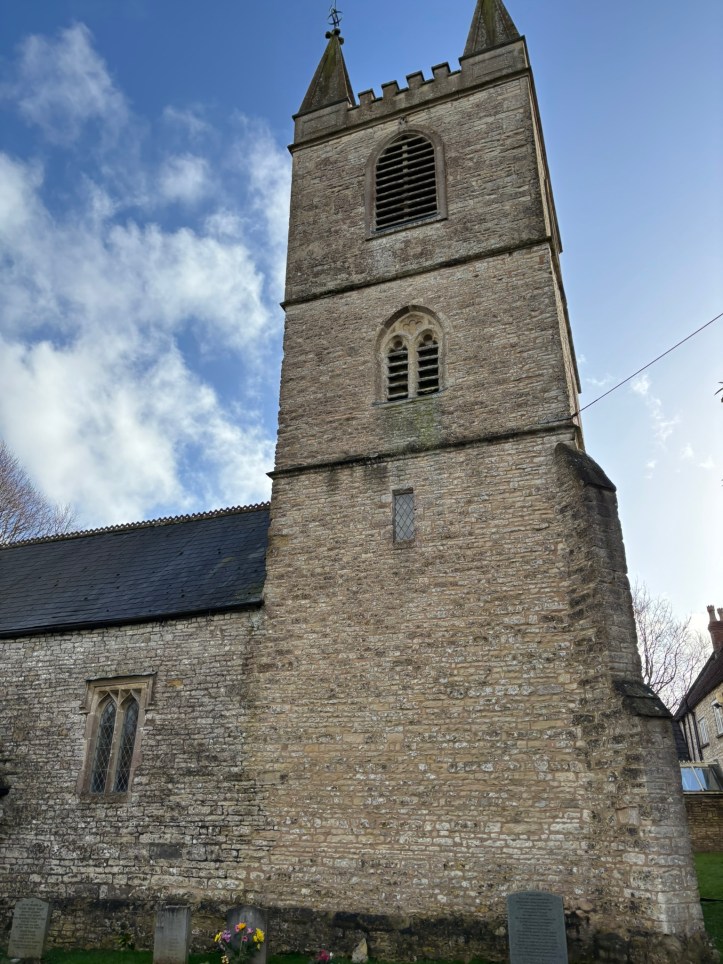
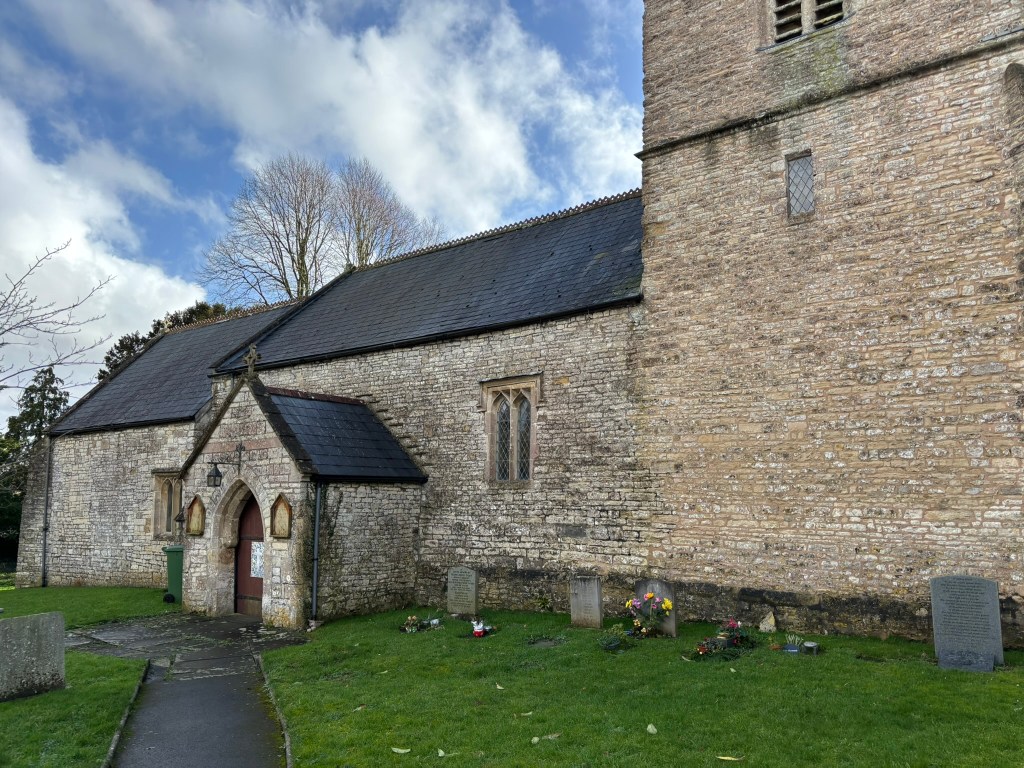
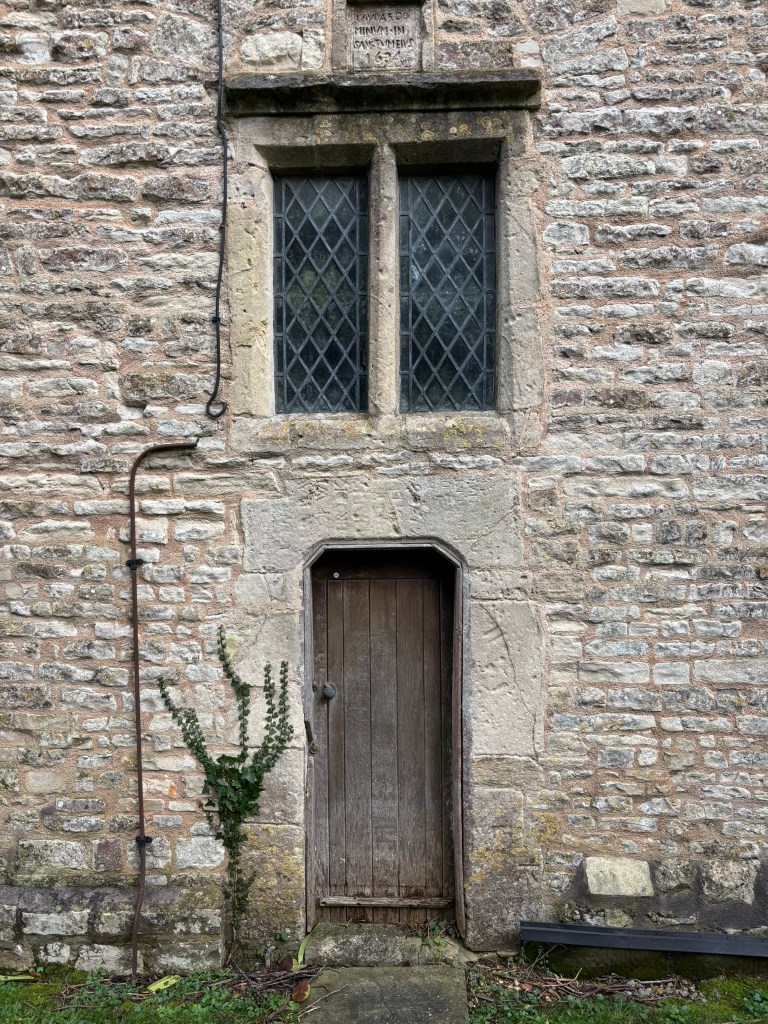
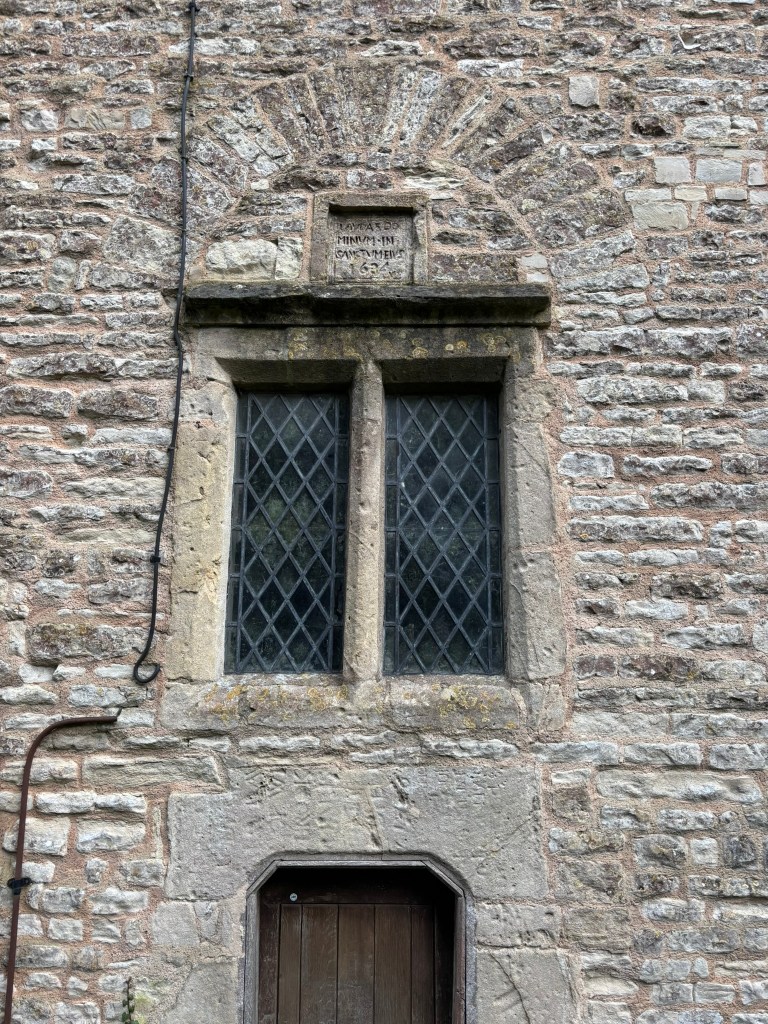
At the base of the tower there is a small door and two windows. Above the windows is a small ledge and a plaque written in latin with the date 1634. This seems like the oldest section although there was apparently an even older building from the 12th Century on the site before this and some sections of this are incorporated into the current building.
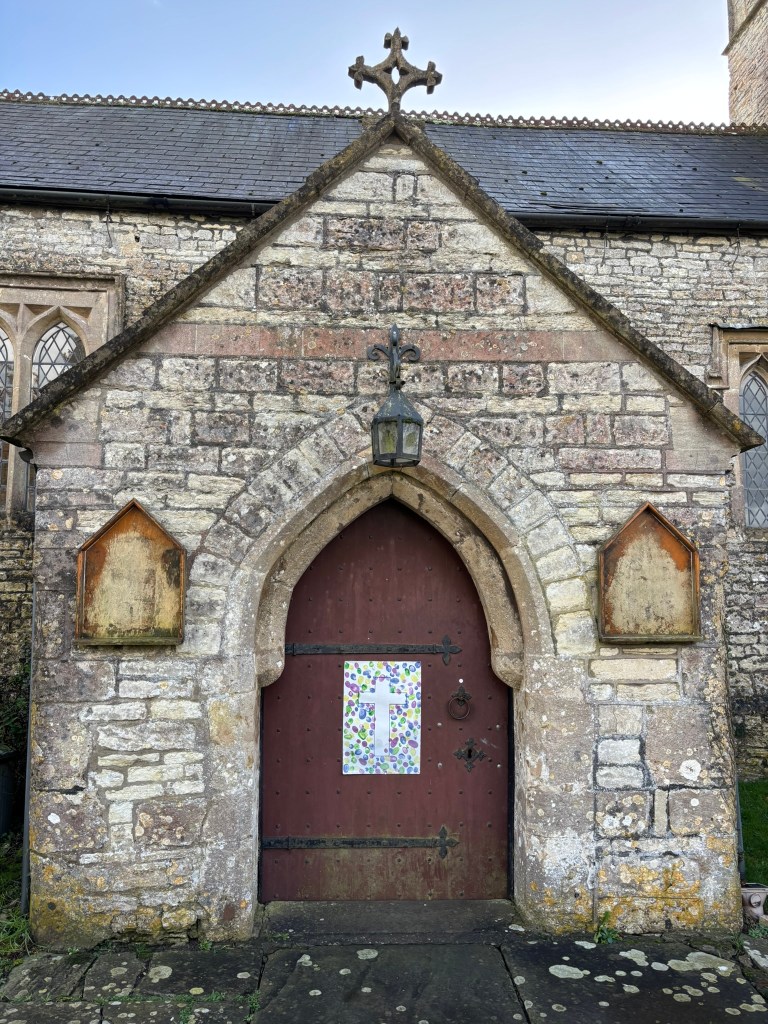
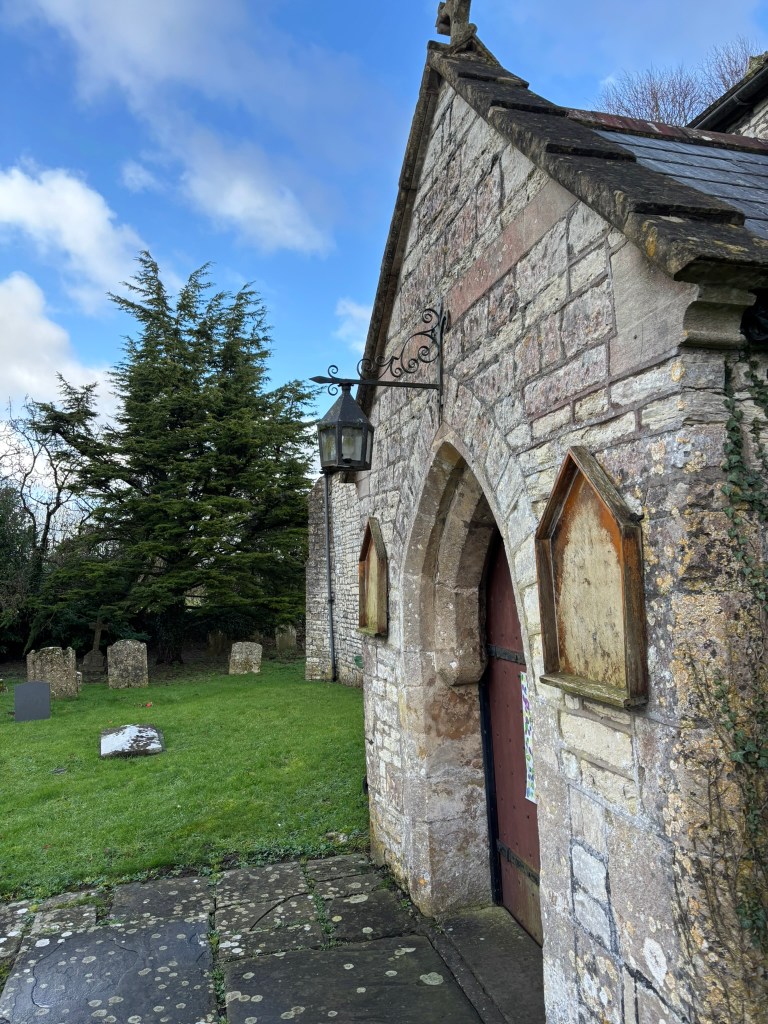
The entry way is on the side, facing into the old graveyard, with the old wooden door and lamp.
There are several generations of my ancestors who were baptised, married and buried here – the earliest event I have found is a marriage in 1757:
- My 6th Great Grandparents William Shore & Elizabeth (Betty) Judith Reed married here on 5 June 1757. Betty died on 14 April 1776 and William died on 3 May 1807. They are both buried at St Peters.
- Their son was my 5th great grandparent. Their son William Shore was born in Corston in 1765. In 1788 he married Susannah Coale who was born in nearby Farmborough (20 min walk) in 1762. Susannah died in on 15 May 1844 and he died a few years later on 6 Oct 1850.
- My 4th great grandmother Elizabeth Shore was born in Marksbury on 18 July 1790, baptised in St Peters on 10 Oct 1790, and died and was buried here on 24 Sept 1872. She married John Hapgood on Christmas Day in 1813.
- Their son Thomas Hapgood was my 3rd great grandfather. He was born on 5 Nov 1817, married Hester Hanney in 1839 and emigrated to Australia with his brother George Hapgood. Their sister Susannah Hapgood had married the blacksmith Edward Dando and emigrated in 1853 for the Victorian Goldrush.
- Hester Hapgood nee Hanney‘s parents also lived in Marksbury. Charles Hanney was born in nearby Compton Dando and married Hannah Branch on 28 June 1812 at Marsbury. She died in May 1823 aged 35. Charles Hanney died in 1864 aged 80 and they were both buried at St Peters at Marksbury.
This is just my direct ancestors – there are also dozens of siblings and cousins and spouses of the extended family with connections to Marksbury, or to towns and villages that are close by.
Inside St Peters
By good fortune (or divine providence) there happened to be a service at St Peters on Sunday. The local parish manages 3 churches close by and services rotate. St Peters only holds a service one Sunday a month and it happened to coincide with my visit. I messaged “The Benefice of Farmborough, Marksbury, and Stanton Prior” and checked that it was OK to come and see the church and the rector was very welcoming. I decided that I had the extra rare opportunity to spend an hour sitting in the same church that my ancestors were baptised, married and farewelled, and presumably attended with much of the village every Sunday.
And so, I went to church!
It was a small congregation of 9 people plus the rector and me. They were all very friendly and interested in what had brought me to their little service. I was given a sermon sheet, a hymn book and offered coffee and biscuits and a warm welcome. I haven’t been to a church service since my brief foray with Girls Brigade when I was 16, and so I am certainly no expert, but I thought the Rector Guy gave a very good service focussing on all the things that should be the focus of a sermon – thinking of others, having compassion and forgiveness, and being a better person. There is a lot to be said for spending 1 hour a week reflecting on how to be a better person next week. Some hymns had enough verses that I was able to follow the pattern of the tune and quietly sing along. The hymns all had the composer and date listed under them, and some of the hymns were old enough that its possible to imagine that the same songs were sung by the Hapgoods in the 1800s.
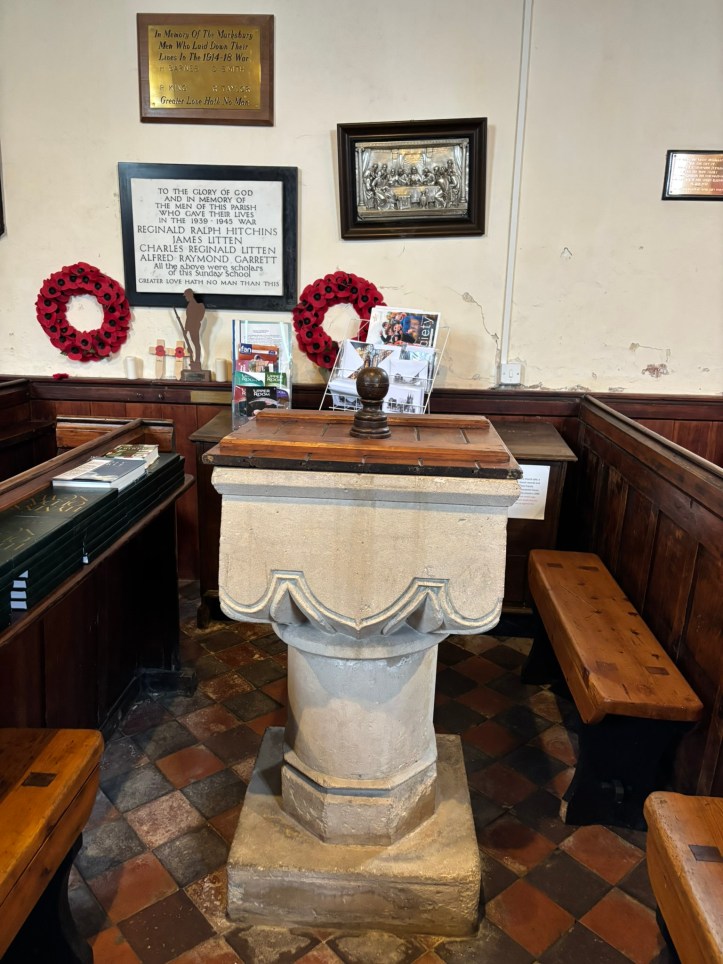
I was sitting close to the white stone baptism bath which is in the middle of the main section and opposite the main entry door. It turns out to be from the 12th Century Norman era (!!) according to the entry for the Corpus of Romanesque Sculpture [3]. I wish I had taken more photos but there are many more photos and details at the romanesque corpus site.
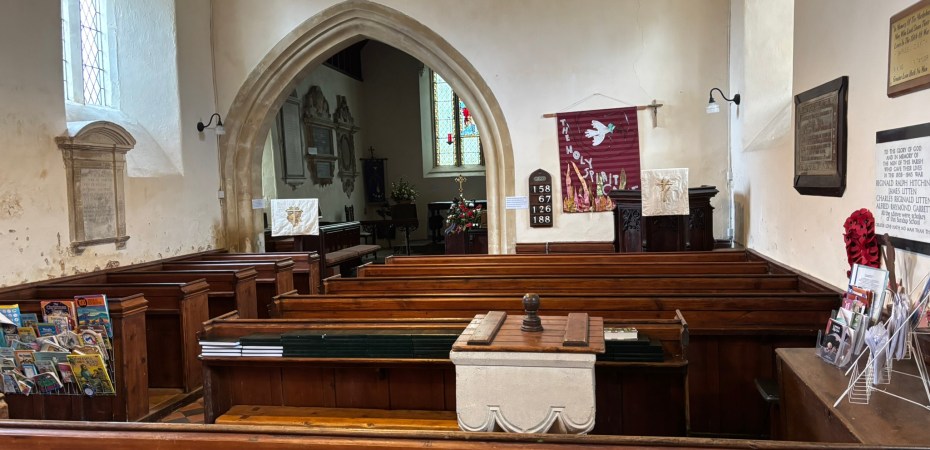
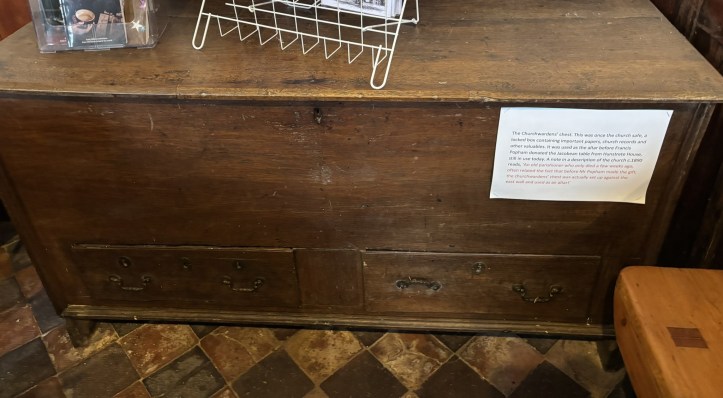
Right behind the font is a large chest which has a sign attached explaining it was used to hold all the church records and valuables. This is where all the baptism, marriage and death records for the parish would have been kept, until they were transferred to the Bath Records office (and digitised, now on Ancestry). It was also used for some time as the church alter.
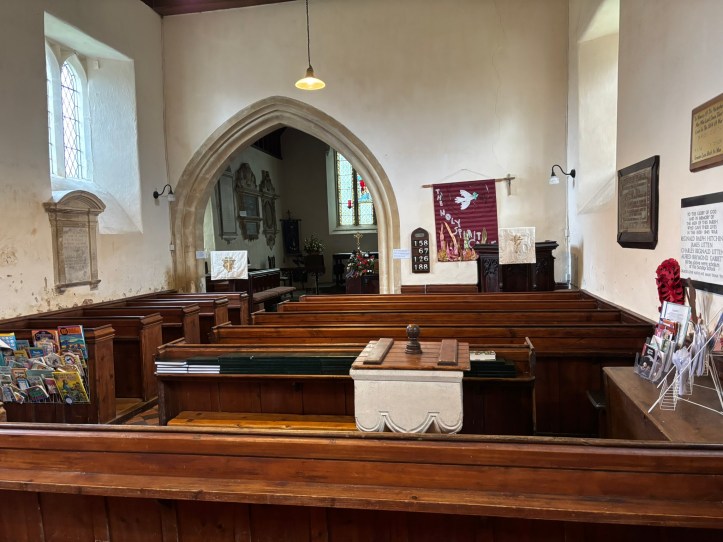
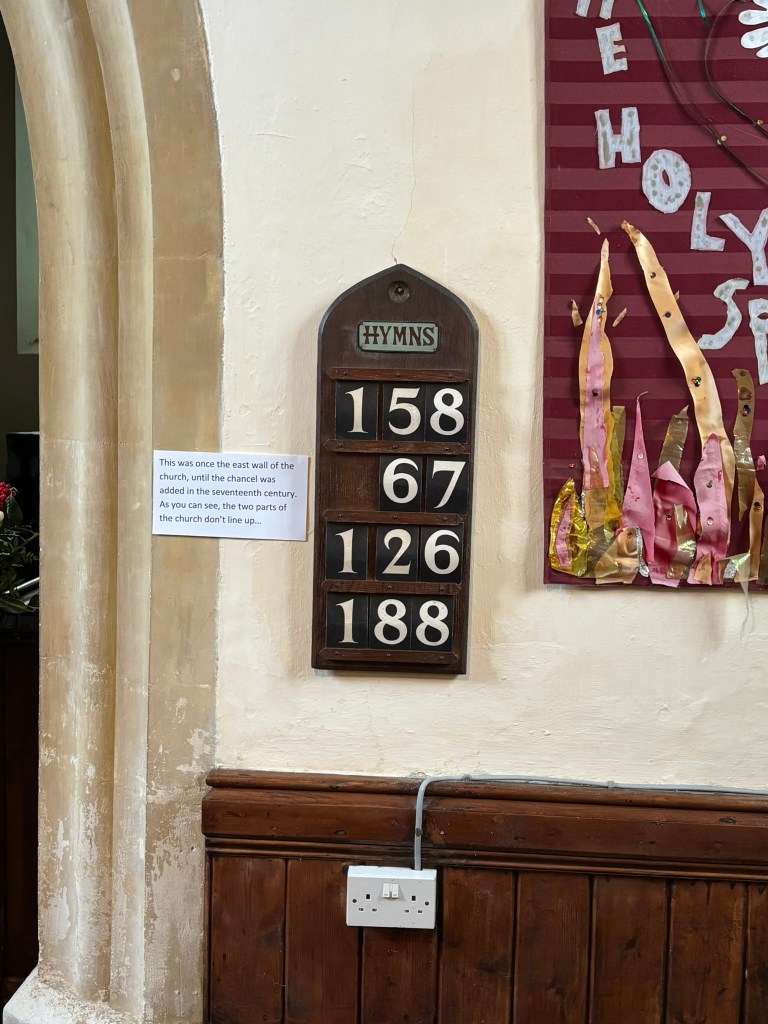
The view from the pews shows the main archway and the view through to the alter area. The large arch is also apparently from the Norman era but is positioned to one side of the church, and not symmetrical. This was once the outer wall of the church and the extension was added in the late 1800s, and this was designed to be (more) symmetrical. Its oddly arranged in a quirky way, which I quite liked.
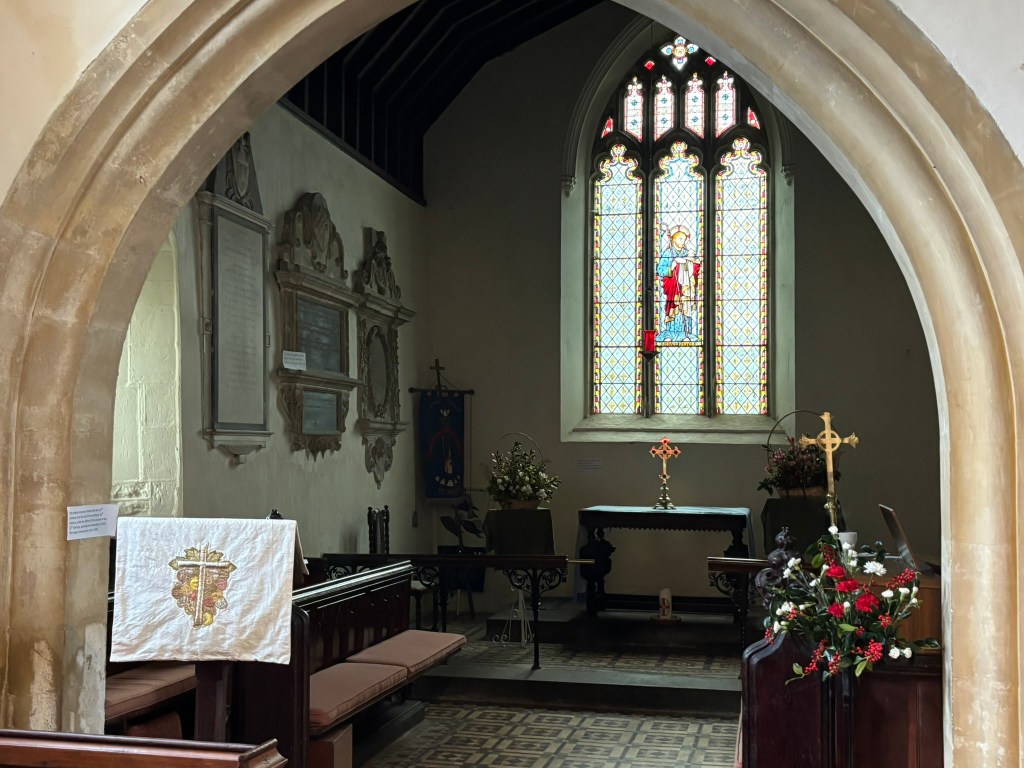
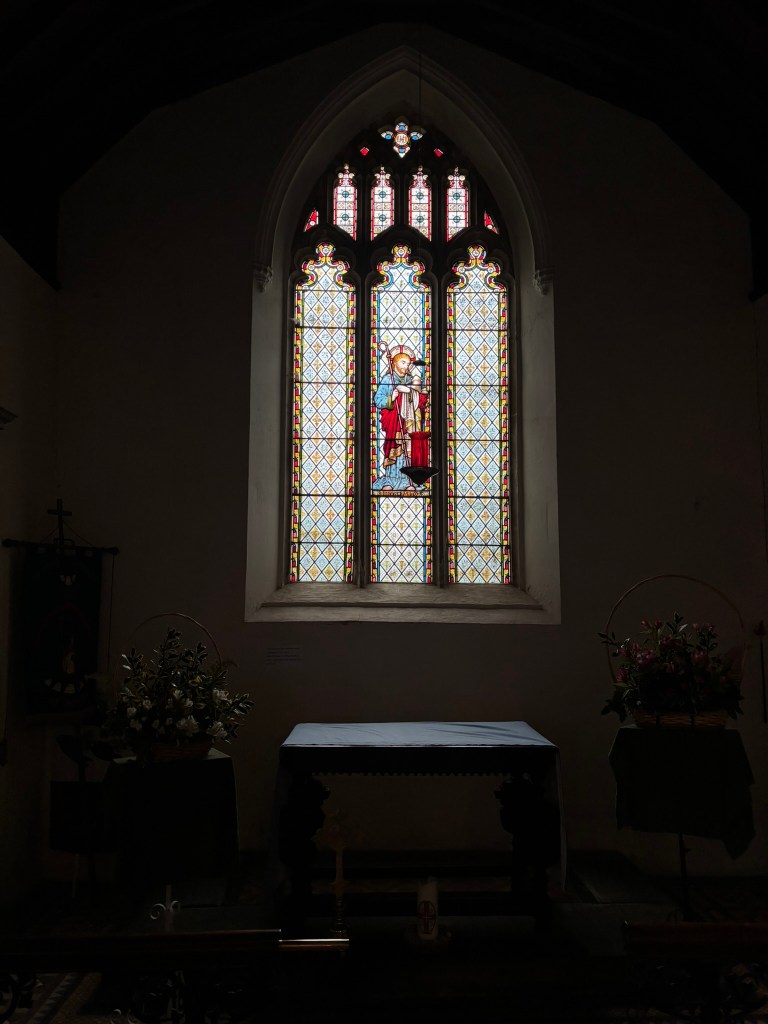
There is a large stained glass window at the end of alter. I really liked the Hymn indicator, which appears in photos of the church from 1910.
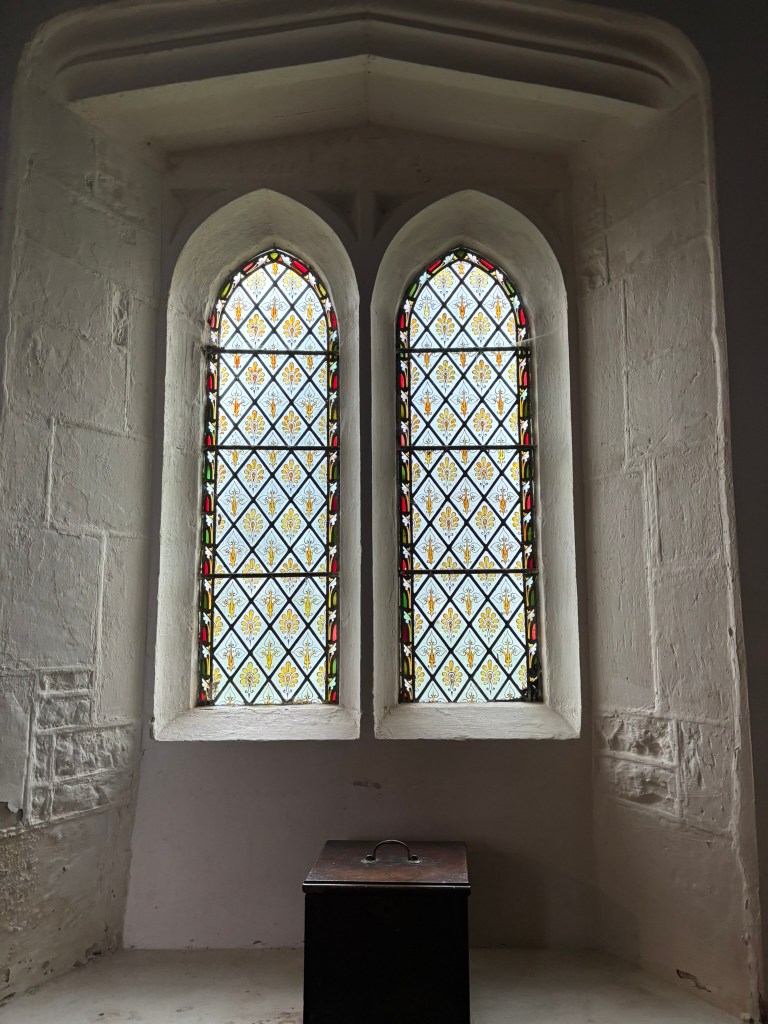
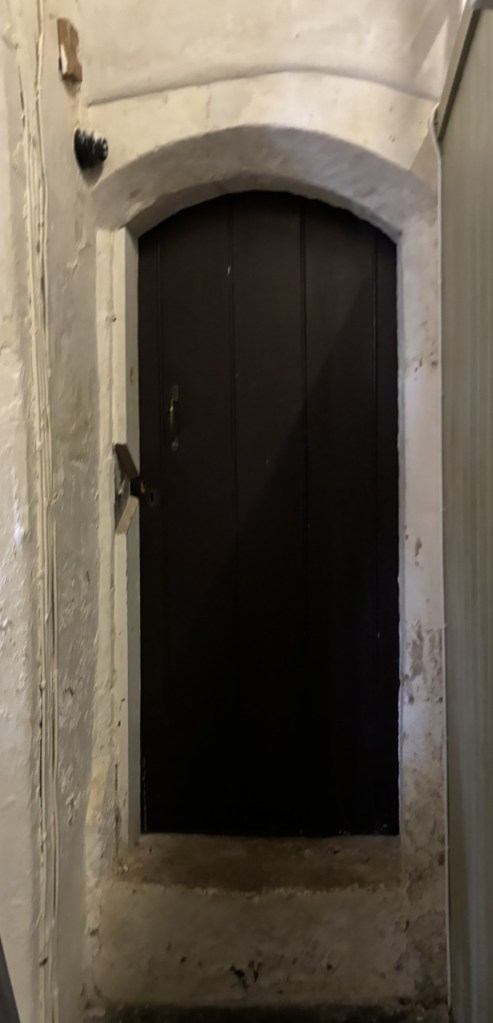
There are several plan windows with crosshatch leadlight, and a few stained glass windows. I also saw the door to the tower and the bells – and no, it wasnt open and I didnt go up. Safety first!
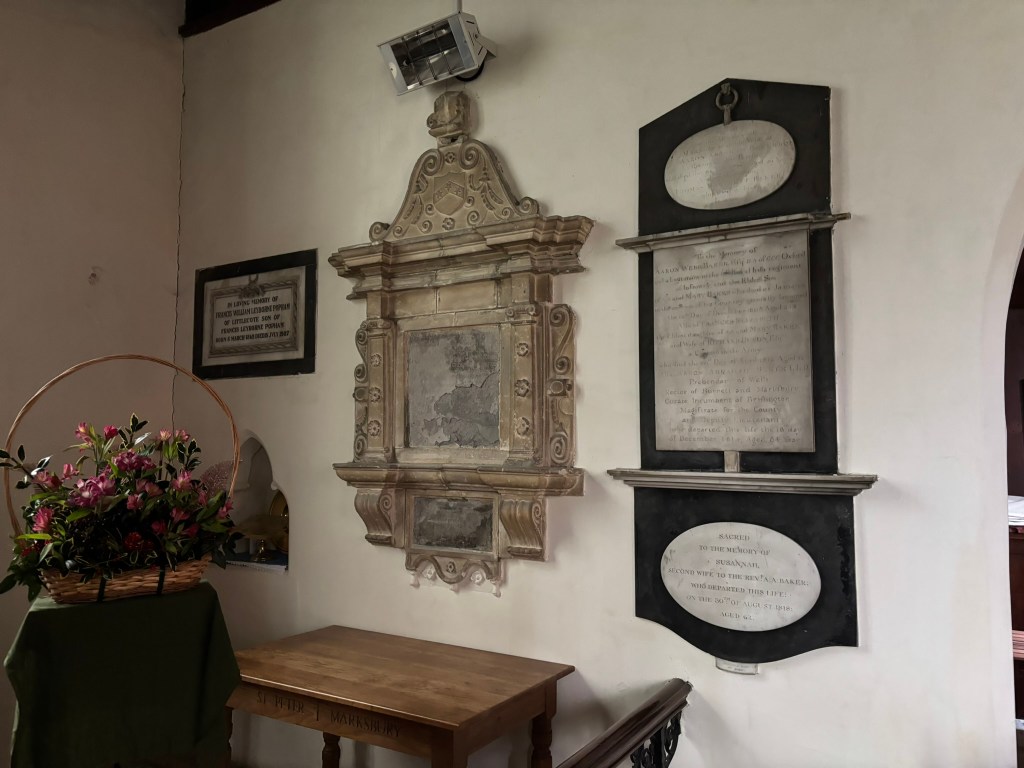
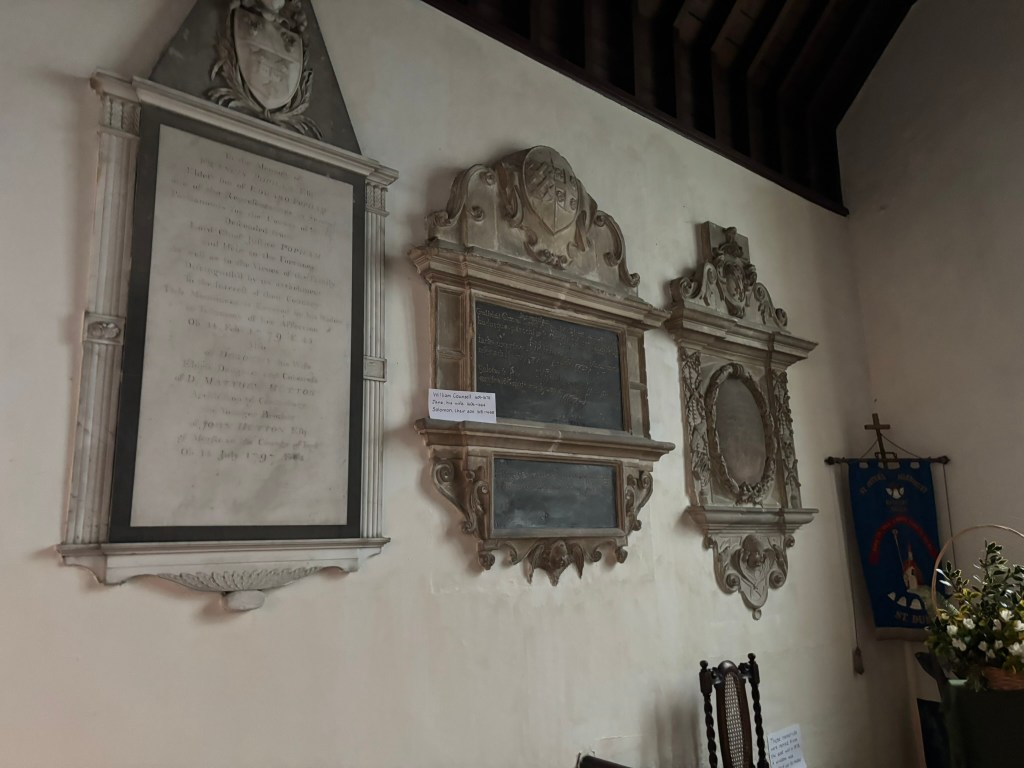
The walls of the church have many plaques which are tributes to former members of the parish. They were spread all around the church, as well as WW1 and WW2 plaques with poppies near the pews. These are all for wealthy families of the area, and the Hapgoods were definitely not rich!
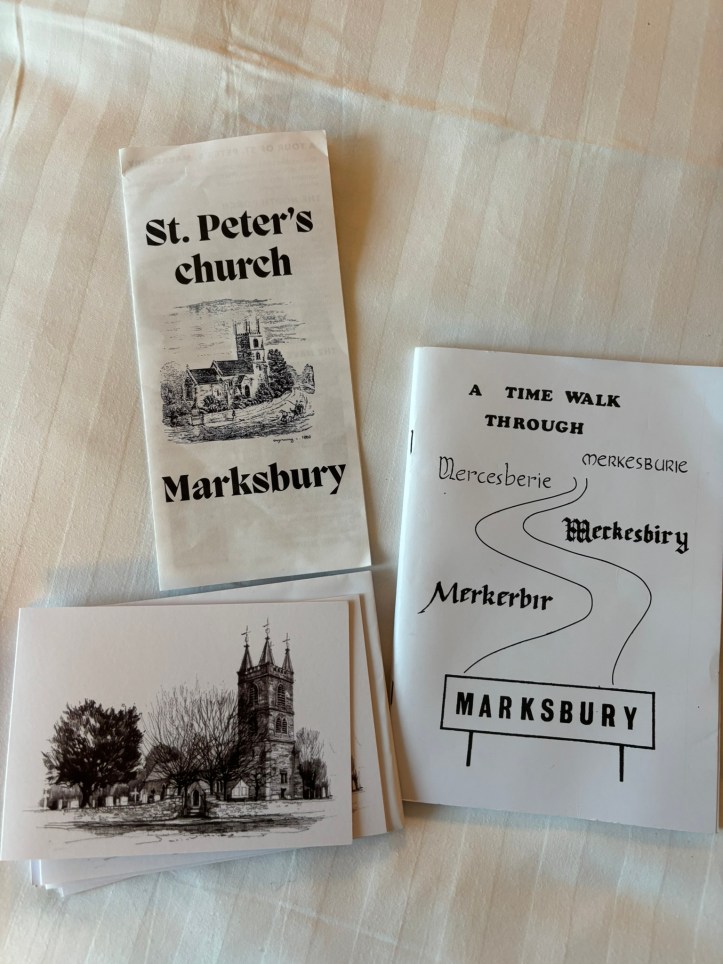
At the end of the service , there was more tea and biscuits and chit-chat. The Rector gave me a brochure about the church and I bought a packet of cards featuring a sketch of St Peters. But the piece-de-resistance was: a booklet with the history tidbits and stories of Marksbury by Judith Tibbots! Tibbotts is a Marksbury family name. It was first printed in 2000 and then slightly updated and reprinted in 2024. Obviously I bought a copy! It a treasure trove of information about the houses that are in Marksbury, what used to be there, and answered quite a few of my questions. Nothing directly about the Hapgoods – but there is a citation to a series of letters by Inspector R Hapgood written in 1998 about Marksbury that was used to compile the book. but it probably will help more with untangling the 1851 census. If only I had had a copy on Friday!
The congregation was obviously very small, and represented the combined congregation of 3 local churches. Judy (or was it Sally?) explained that the church services were coming to an end, and the church would be transferred to a trust to allow upkeep and maintenance of the church itself. It will still be used for weddings, funerals and special occassions, but it will soon no longer host regular Sunday sermons. This is sad but obviously you cant keep a church open indefinitely for a small congregation, and its a story being repeated right across the UK (and Australia). The history will be preserved and the building looked after although something will be lost when a church that has been running since the 12th Century closes its doors….
St Peters Graveyard
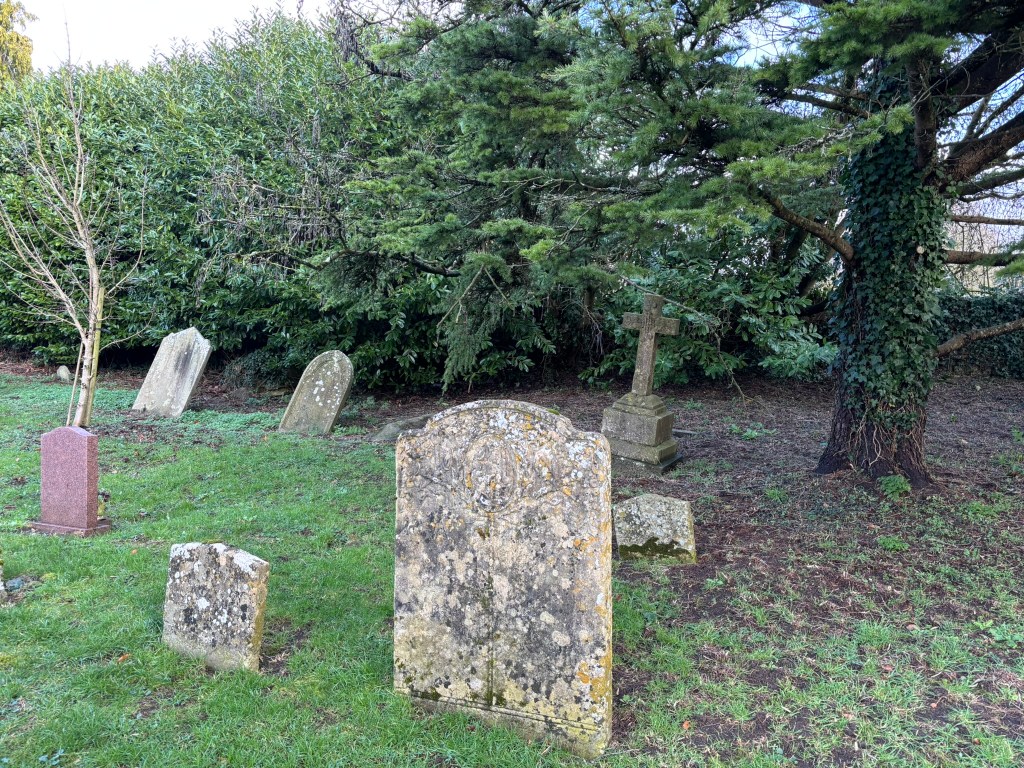
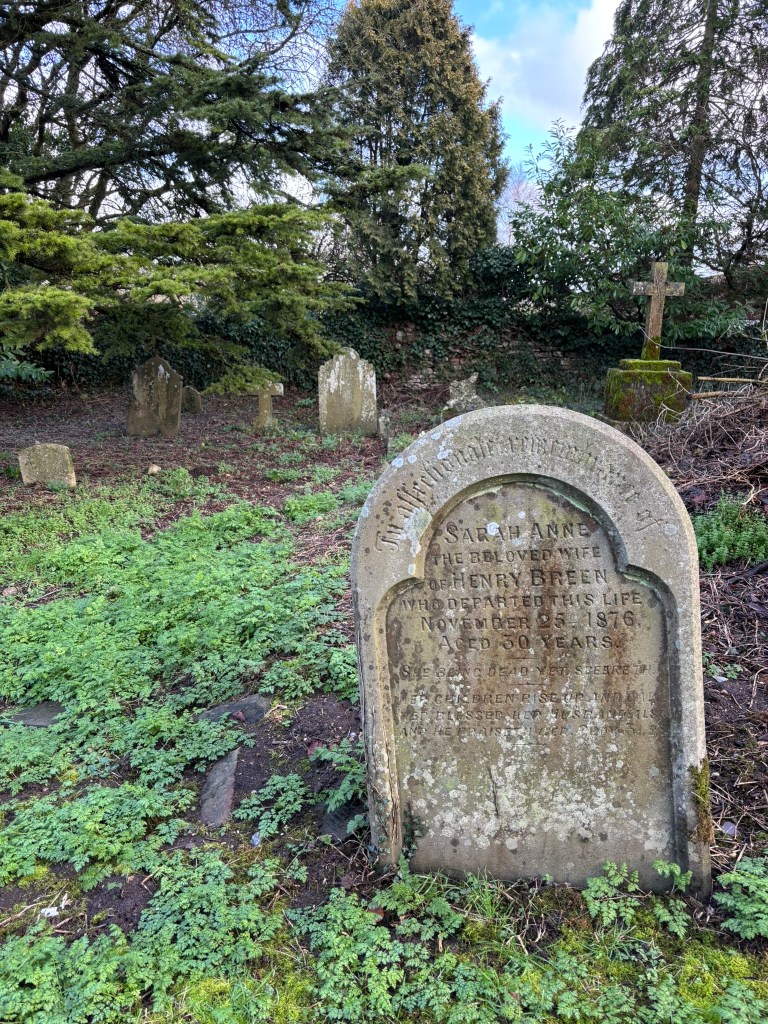
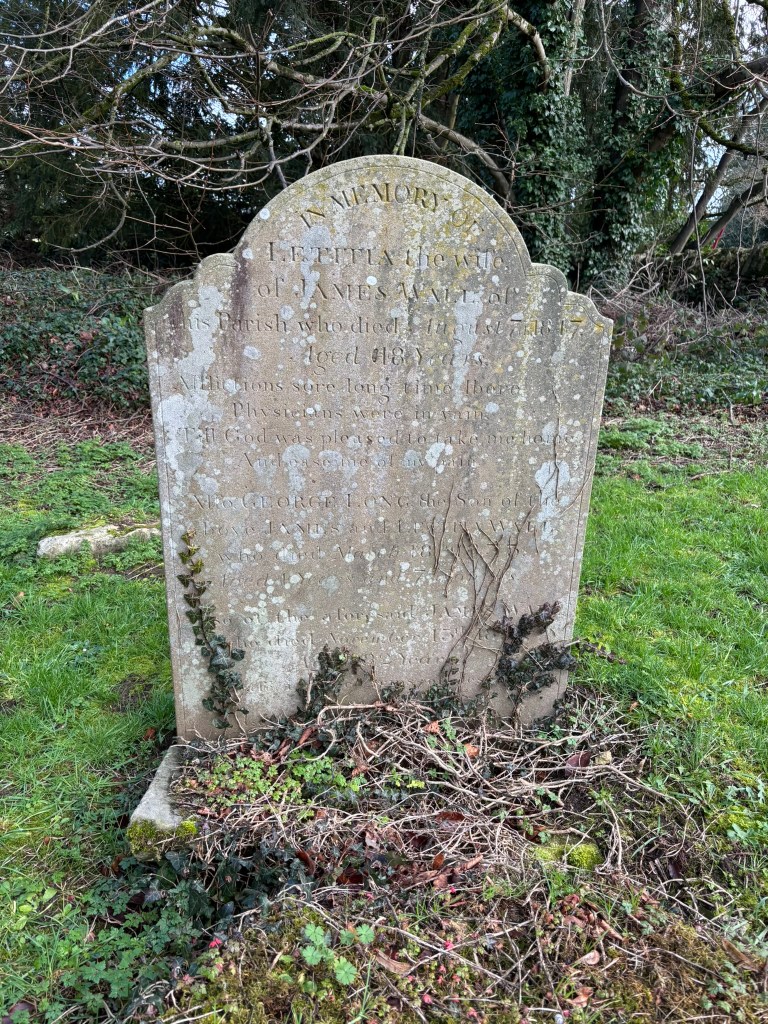
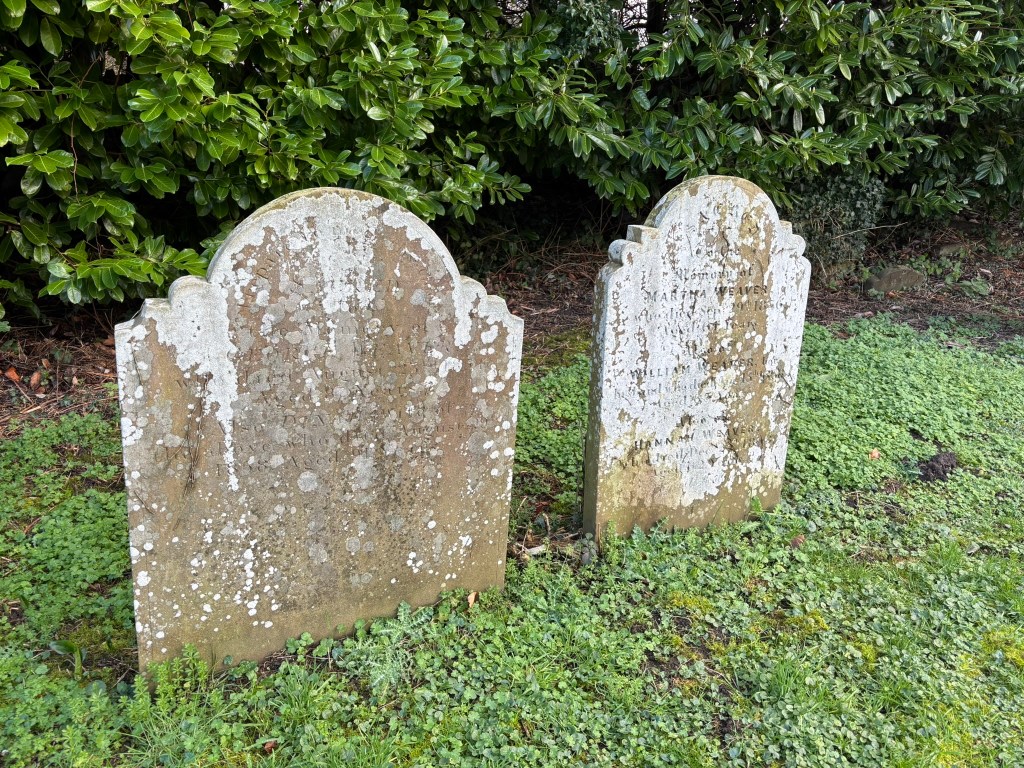
The church grounds are also the graveyard and there are headstones here from 1700s through to WW1 and WW2 plus some more recent and modern graves. The ground is lumpy and uneven, and like all old churches it looks like the church has sunk over time but really its the grassy graveyard grounds that have risen slowly over the centuries. The Hapgoods and Hanneys were agricultural labourers, and some of them are buried on the grounds but there are no headstones – they were too poor for headstones. There are many family names that are familiar to me from the Census and amount of time I have spent looking at Marksbury such as the Harding family who made cheddar cheeses at Vale Court Farm, and family names that are maiden names of ancestors or the names of more distant relatives (eg cousins of my 4th great grandfather) from in and around Marksbury (eg the Weavers).
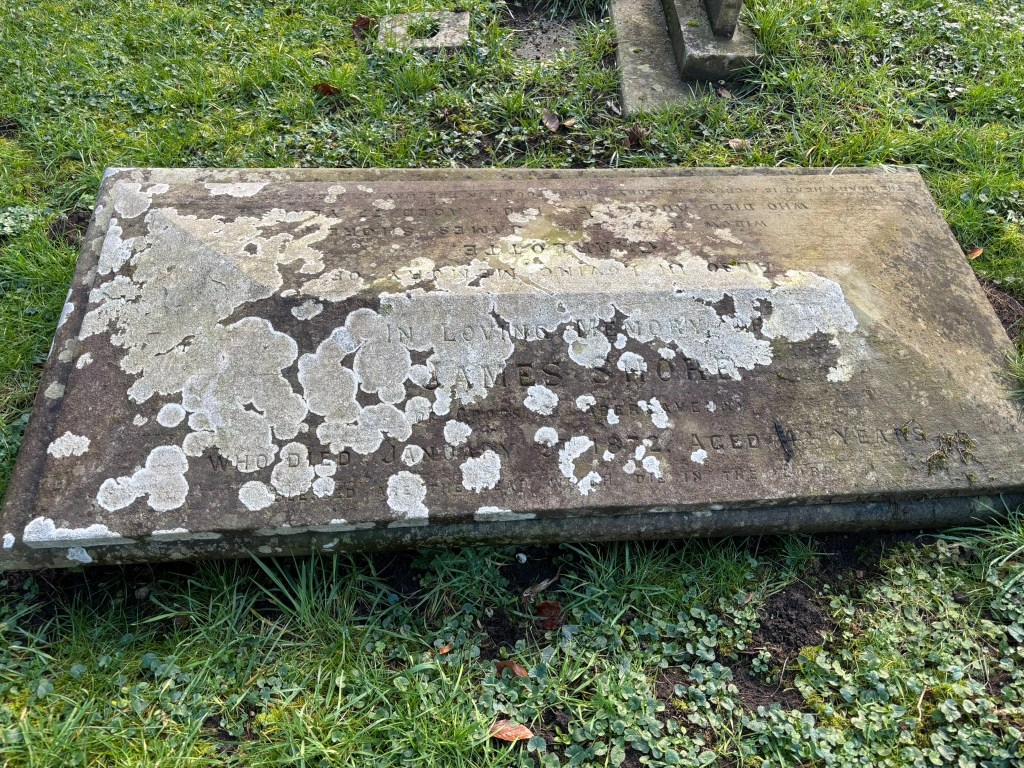
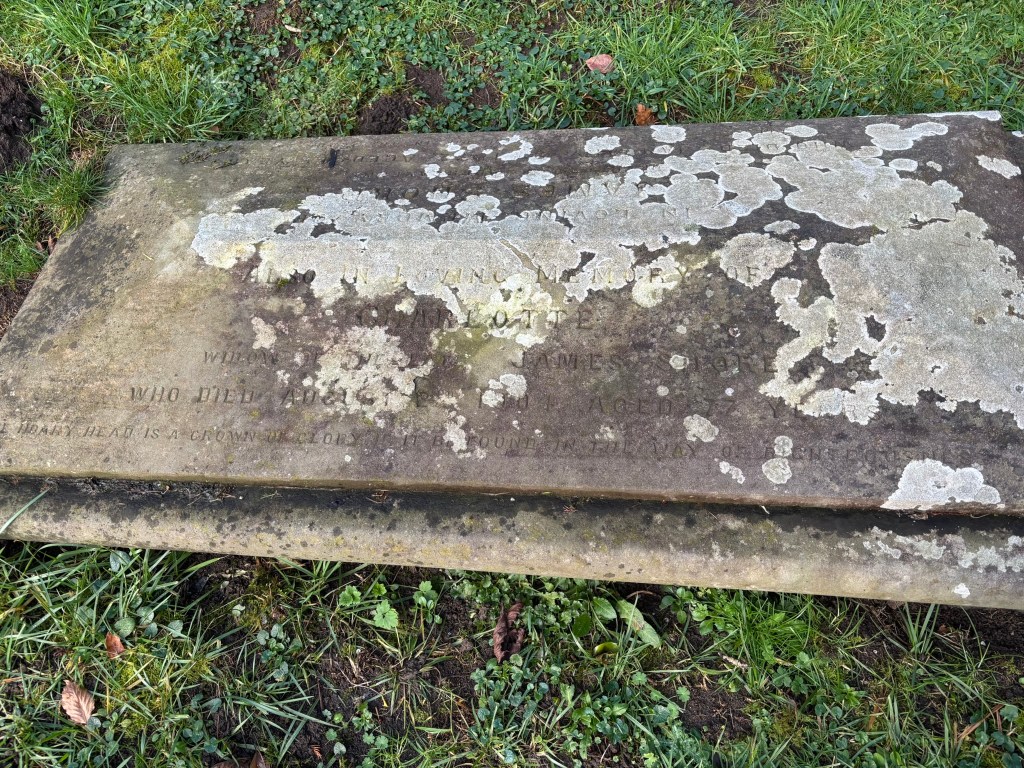
Based on a search in Findagrave.com for St Peters Marksbury there are 7 Hapgoods buried at St Peters, 6 Hanney family members, and close to 50 members of the Shore family. They do not have any headstones – the closest is a headstone for James Shore in 1872 and his wife Charlotte in 1904 but they would be distant relations. A gentleman at the church said that they have mapped the graveyard to work out where people are all buried, even if there is no headstone and that he would see what it says about Hapgoods Hanneys and Shores (although clearly not all 50+ people!).
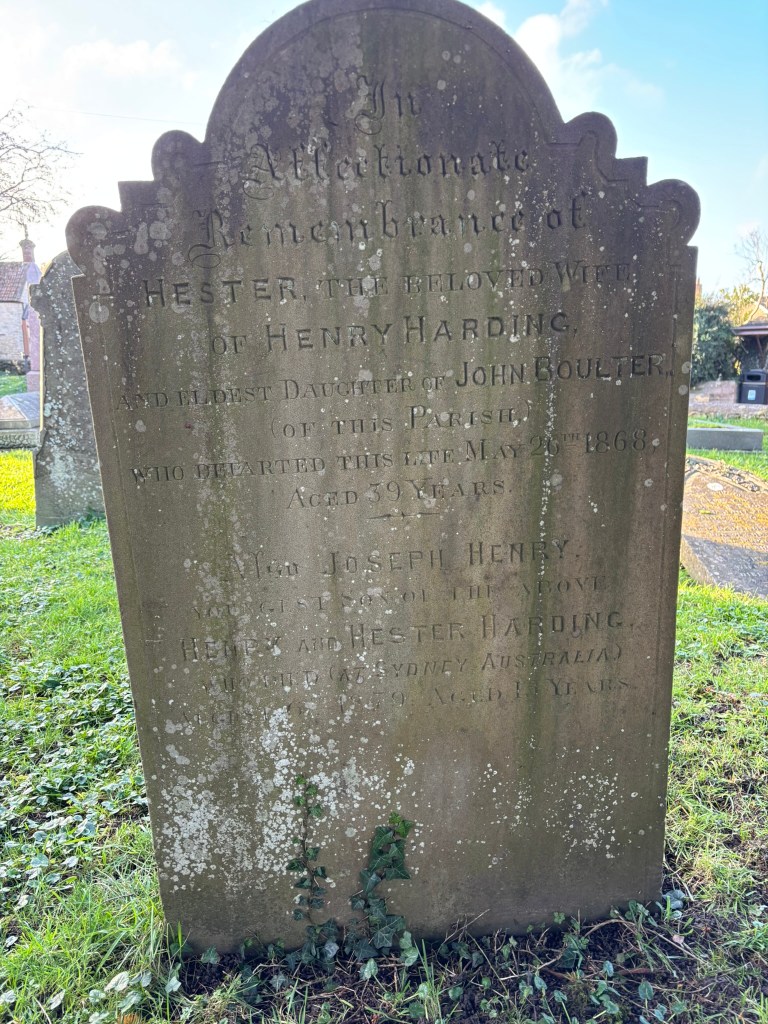
The Harding family of cheddar cheese and Court Farm are also here – Joseph Harding and a row of Harding family members. The final headstone caught my eye as it captured the scale of emigration to Australia as well as the tragedy and grief. The headstone was erected to remember Hester Harding (nee Boulter), wife of Henry Harding who died in 1868. There is an inscription in the lower half for their son Joseph Henry Harding who died at Sydney Australia on August 6th 1879 aged 15 years. This is a sad headstone – their son died so young on the other side of the world, and his parents grief has echoed from this headstone ever since.
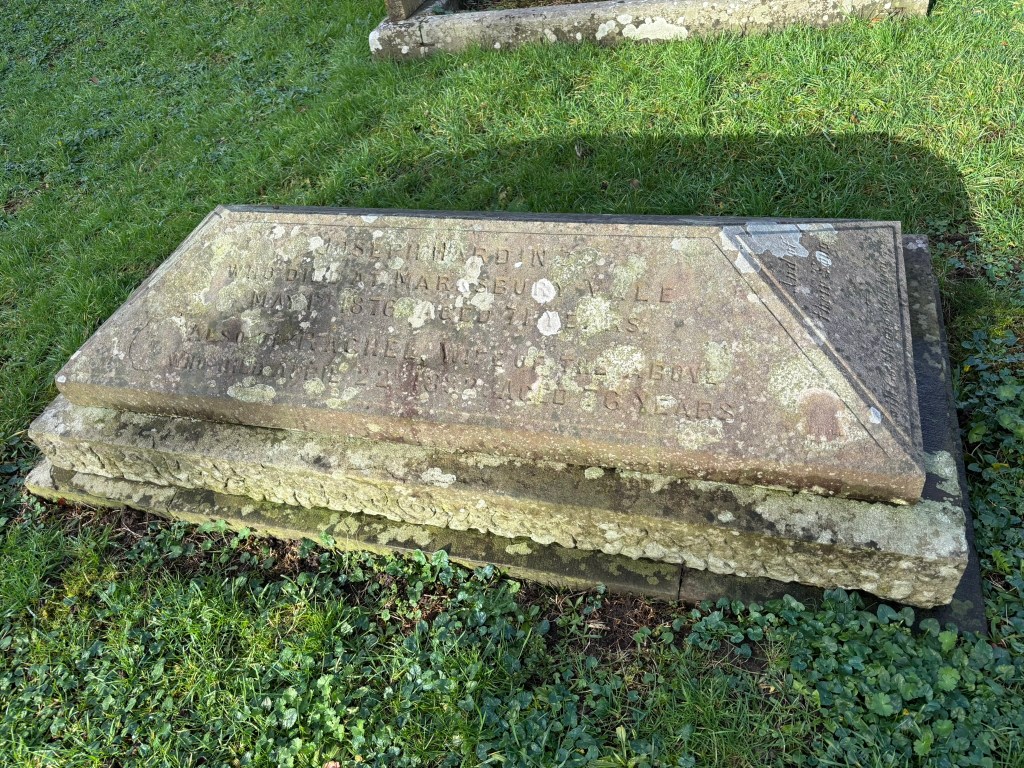
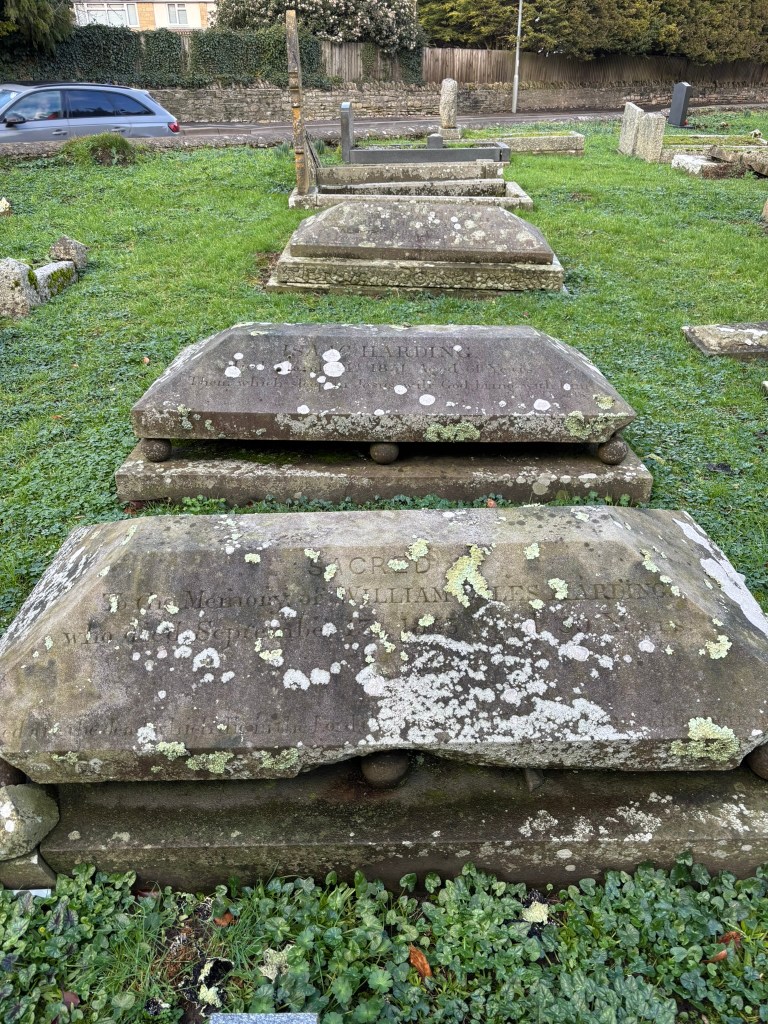
There were many lovely old headstones in the graveyard – here are a few examples
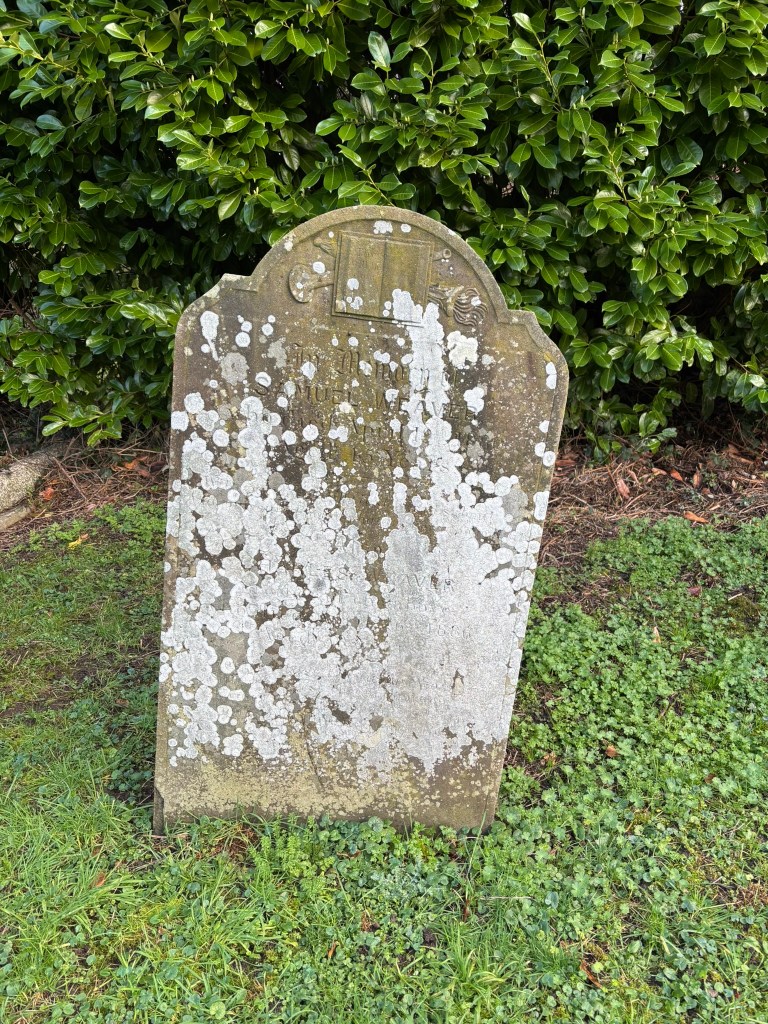
This was my final stop in Marksbury – and what a visit it has been. My sisters, cousins, and a number of my “ancestry relatives” have been following my social media posts and this blog and have added “Marksbury” to their future travel wishlist… I am the first Hapgood I know of to make a visit back to Marksbury as far as I know – my Dad visited Bath in late the 1960s in part because of the link but I don’t know if he knew they came from Marksbury at the time or not. Sadly I cant ask him now, and I spent a lot of the trip thinking how much I wish I could tell him all about it as he would be fascinated… Maybe Hapgoods will reappear more regularly as guests of the Forge (or the Stables, or the Pig Inn) in future. I certainly hope to come back one day and to have more time to see all the local sites – more standing stones, long barrow burial sites, roman forts, the Pensfield Viaduct, and Bath itself.
Its been a great trip and I am so pleased I squeezed this side-visit into my work travel trip.
Sources:
[1] Historic England entry for Church of St Peter Marksbury https://historicengland.org.uk/listing/the-list/list-entry/1320777?section=official-list-entry
[2] More photos of St Peters at https://historicengland.org.uk/listing/the-list/list-entry/1320777?section=comments-and-photos
[3] Charlotte Shore on Findagrave for Marksbury St Peters https://www.findagrave.com/memorial/222821206/charlotte-shore
[4] St Peter Marksbury entry in The Corpus of Romanesque Sculpture in Britain & Ireland https://www.crsbi.ac.uk/view-item?i=117007
[5] A Walk through Time Marksbury by Judith Tibbotts, Updated and Reprinted 2024. Available via the St Peters church.
 Hapgoods from Marksbury